How many hens per rooster? Does a backyard flock really need one?
 Piotr Markotpoultry breederWritten for small backyard flocks
This question comes up again and again because it affects both fertility and everyday flock comfort. The number that works on paper is not always the number that feels right in a real coop.
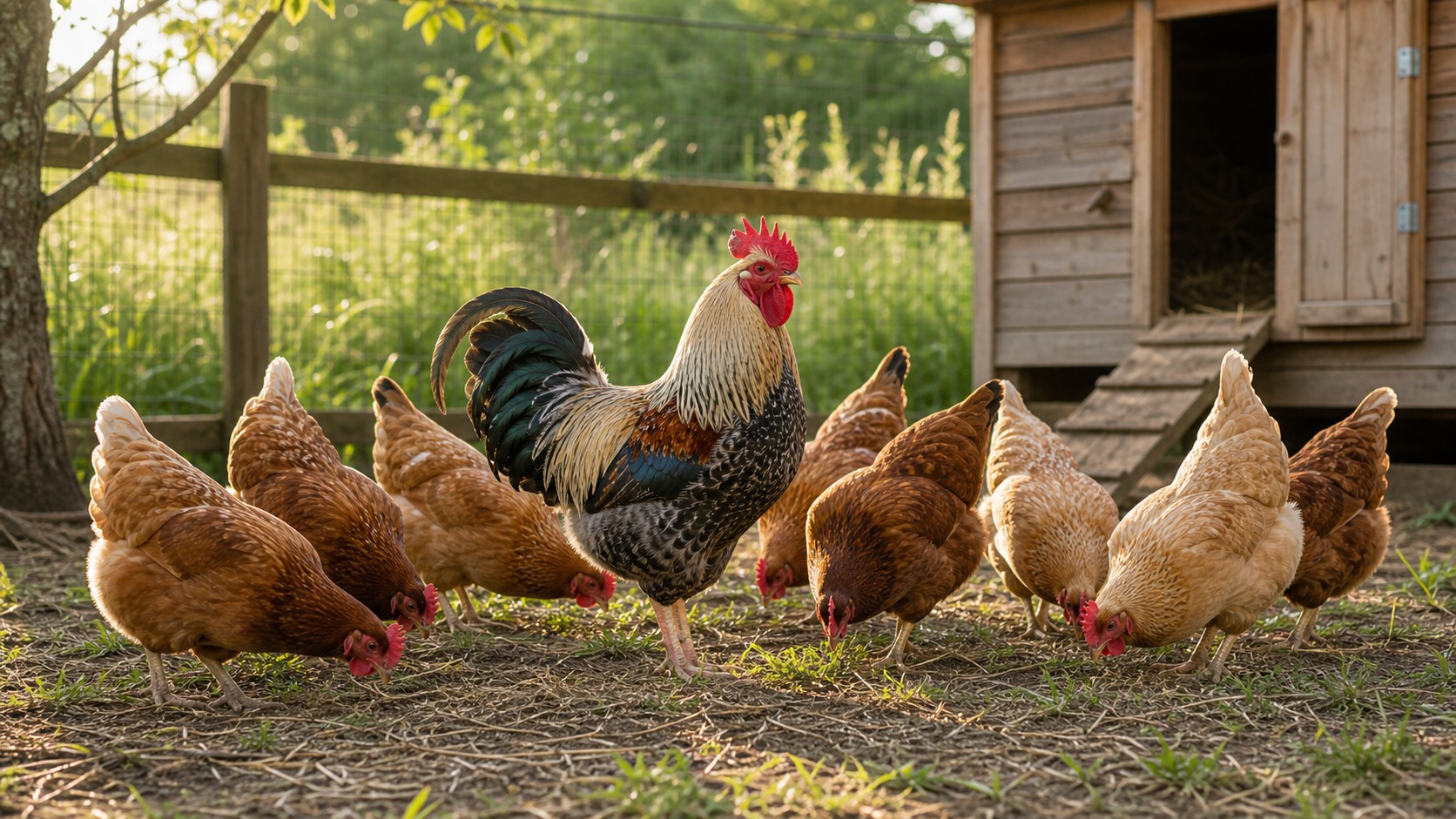
If you only want fresh eggs for the kitchen, the answer is often simpler than expected: you do not need a rooster for hens to lay eggs. A rooster becomes useful when you want fertile eggs, chicks or a more natural mixed flock.
The real trouble starts when one rooster is added to too few hens, or when two roosters are kept in a setup that is simply too small. Then normal breeding behaviour becomes constant pressure, worn backs and a lot of unnecessary stress.
Quick answer
- for kitchen eggs only: no rooster needed,
- for a small breeding flock: often 1 rooster for 8 to 10 hens,
- with a calm male and plenty of room: 10 to 12 hens can still work,
- with only 3 to 5 hens, one rooster is often too much.
Do hens need a rooster to lay eggs?
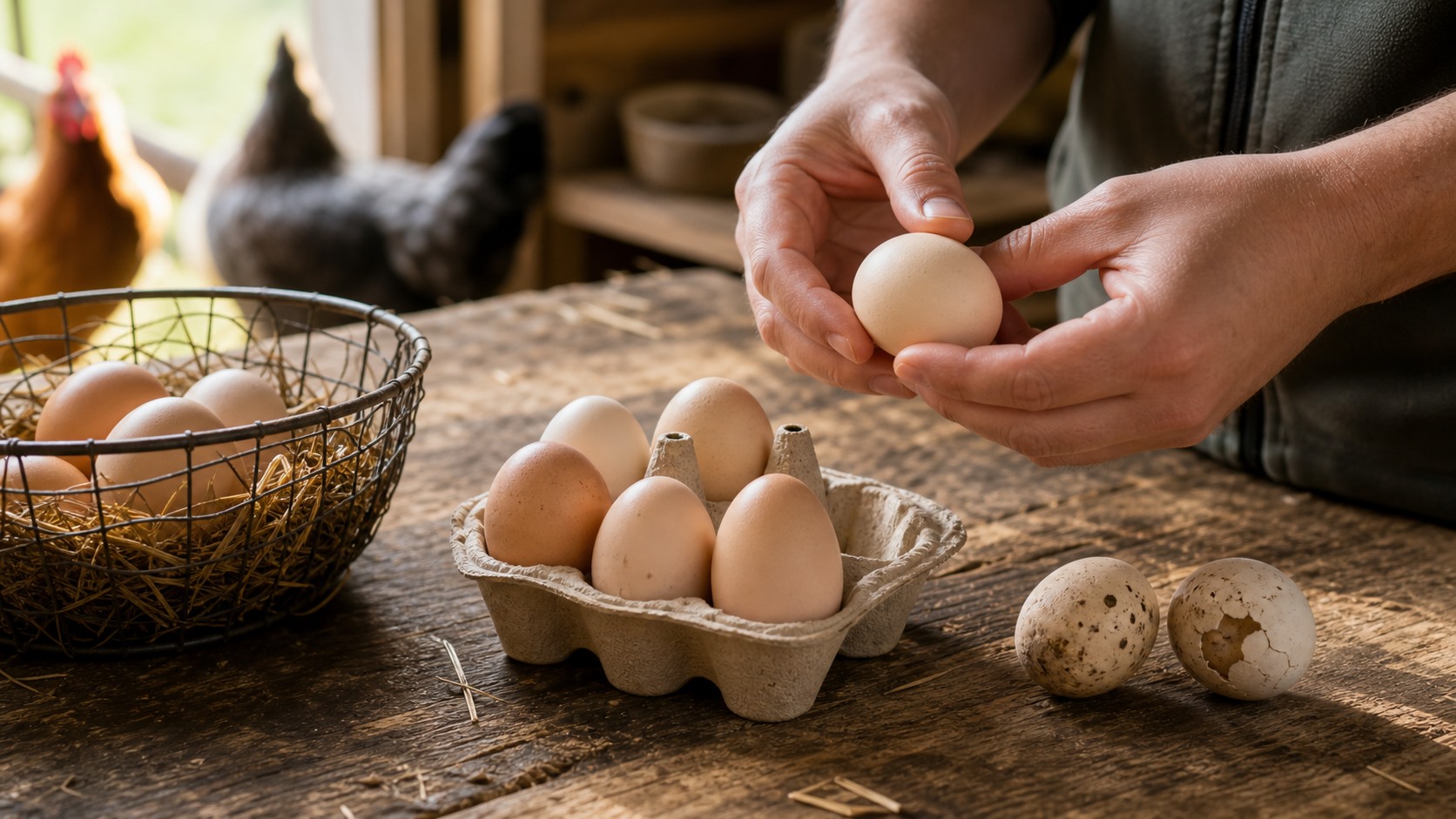
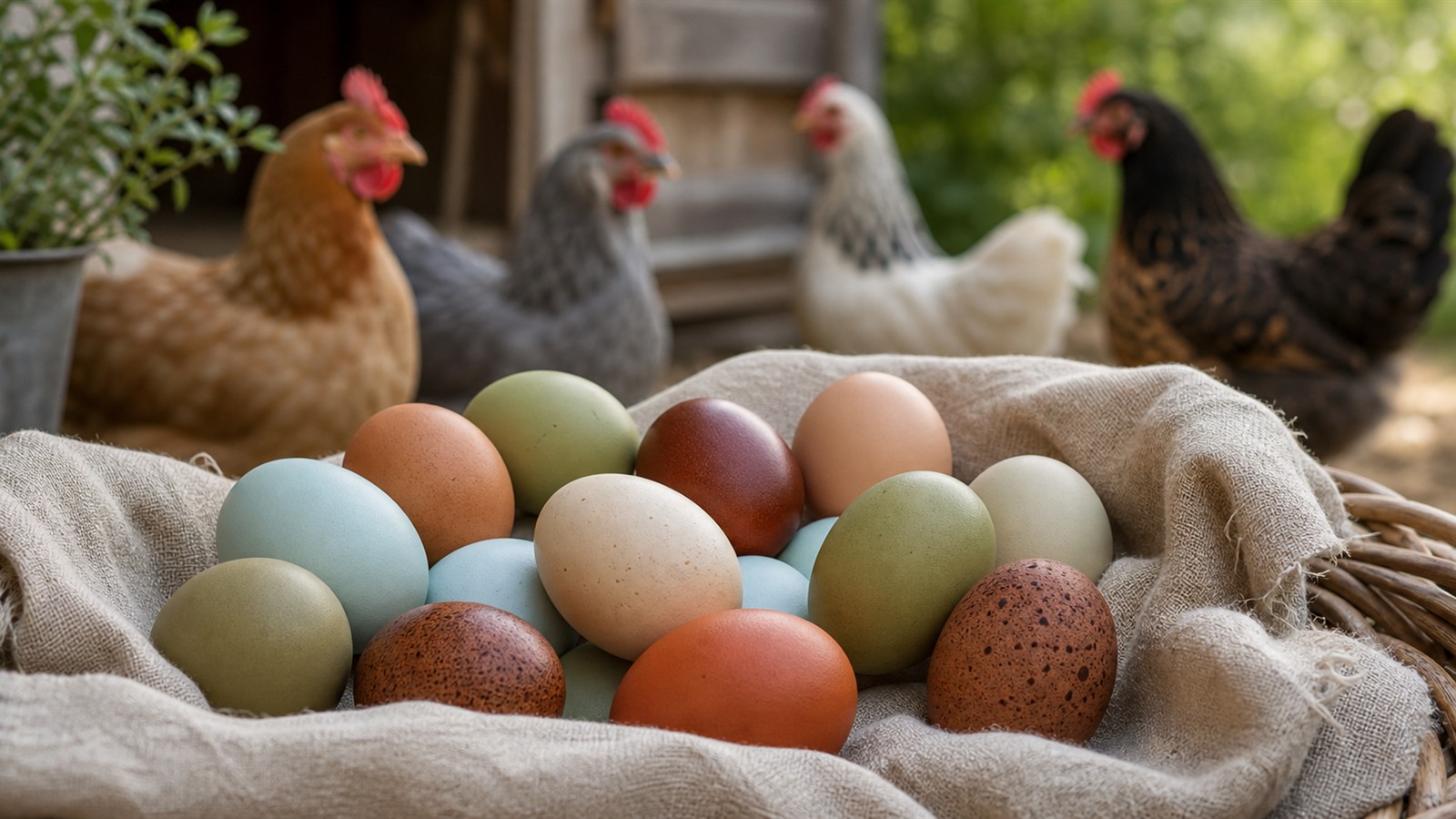
No. Hens lay eggs because of their own laying cycle, not because a rooster is present. The rooster matters only when you want those eggs to be fertile and suitable for hatching.
That alone already answers a lot of backyard questions. If your goal is simply a calm coop and a basket of eating eggs, a flock of hens on its own is usually the easiest option. It is quieter, simpler and often kinder to the flock because there is no constant mating pressure on a small group of birds.
A rooster becomes useful when you actively want to hatch chicks, keep a self-replacing flock or enjoy the natural mixed-flock dynamic enough to accept the extra management that comes with it.
Why the same ratio does not fit every flock
| Factor | Why it changes the answer |
|---|---|
| Rooster temperament | A calm bird can work with fewer hens than a highly driven rooster that is active from morning to evening. |
| Space in the coop and run | If hens cannot step away and rest, even a decent ratio on paper can feel too tight in real life. |
| Breed and body size | Light, active birds and heavier dual-purpose birds do not always behave the same way under pressure. |
| Goal of the flock | A relaxed table-egg flock can be managed very differently from a flock kept for fertile hatching eggs. |
| Second rooster | Competition between males often increases pressure on hens even if the raw ratio still looks acceptable. |
What works in real backyard setups
For a genuinely small flock, I would think in practical groups, not in one magical number copied from the internet. If you have six or seven hens and only want eggs for the kitchen, skip the rooster. If you have around ten hens and actually want fertile eggs, one good rooster is a realistic starting point.
When the flock gets smaller than that, the question stops being theoretical very quickly. Three or four hens may look like they can "handle" one rooster, but many small keepers discover that the same hens end up carrying most of the attention every single day. That is when feather wear, stress and avoidance behaviour start showing up.
In larger groups, a single rooster may become easier to manage because his attention is spread more widely. That still does not mean every flock is happy automatically. Behaviour matters more than formulas.
Signs the rooster is too much for the flock
The clearest signs are worn feathers on the back or neck, the same hens always being chased, hens hiding from the rooster, and a general feeling that the flock never really settles. If one or two hens look rough while the rest of the flock looks fine, that still counts as a problem. The pressure is simply landing unevenly.
Some keepers wait too long because they assume this is just "normal rooster behaviour". Mating is normal. A flock living under constant stress is not. If your hens never get a quiet rhythm, the setup is too tight, the rooster is too intense, or both.
Can two roosters live in one flock?
Sometimes yes, but small flocks are the hardest place to make that work. Two males can coexist when they have enough hens, enough room and a stable hierarchy. In a cramped coop or run, the result is often more chasing, more tension and more disruption for the hens.
If someone asks me whether two roosters are a good idea in a modest backyard setup, my default answer is usually no unless the space is clearly generous and the birds have already proved they can live together without drama.
What I would do in a small flock
If the flock is kept mainly for eggs, I would choose peace and skip the rooster. If I wanted chicks, I would start with one rooster and a group large enough that hens can still move around without constant attention. I would also keep notes instead of relying on memory, because feather wear, behaviour changes and fertility patterns are easier to judge when you actually write them down.
Piotr Markot
Poultry breeder. I write practical notes from everyday small-flock keeping, without making the topic more complicated than it needs to be.

FAQ
Do hens need a rooster to lay eggs?
No. A rooster is only needed if you want fertile eggs for hatching.
What is a good starting ratio for a small flock?
For many backyard breeding flocks, one rooster for eight to ten hens is a practical starting point.
Is one rooster for four hens too much?
Very often, yes. That small group can end up under too much pressure surprisingly fast.
Can I keep a rooster just because I like the look of a mixed flock?
Yes, but you still need enough hens, enough space and the willingness to manage the extra pressure that comes with him.
What this article is based on
Still have a question?
If you want to ask about your own flock size or whether a rooster makes sense in your setup, you can write to me by email.
The address only appears after a click, so it does not sit openly in the page source for simple scraping bots.
Want the flock, eggs and daily notes in one place?
Your Farm helps you keep flock records, egg totals and everyday observations together, so small coop decisions are based on your own notes instead of guesswork.