How to choose and prepare eggs for incubation
 Piotr Markotpoultry breederFor small incubator hatches
Many hatch problems start before the incubator is even switched on. If the wrong eggs go in, the best incubator routine in the world still has less room to help you.
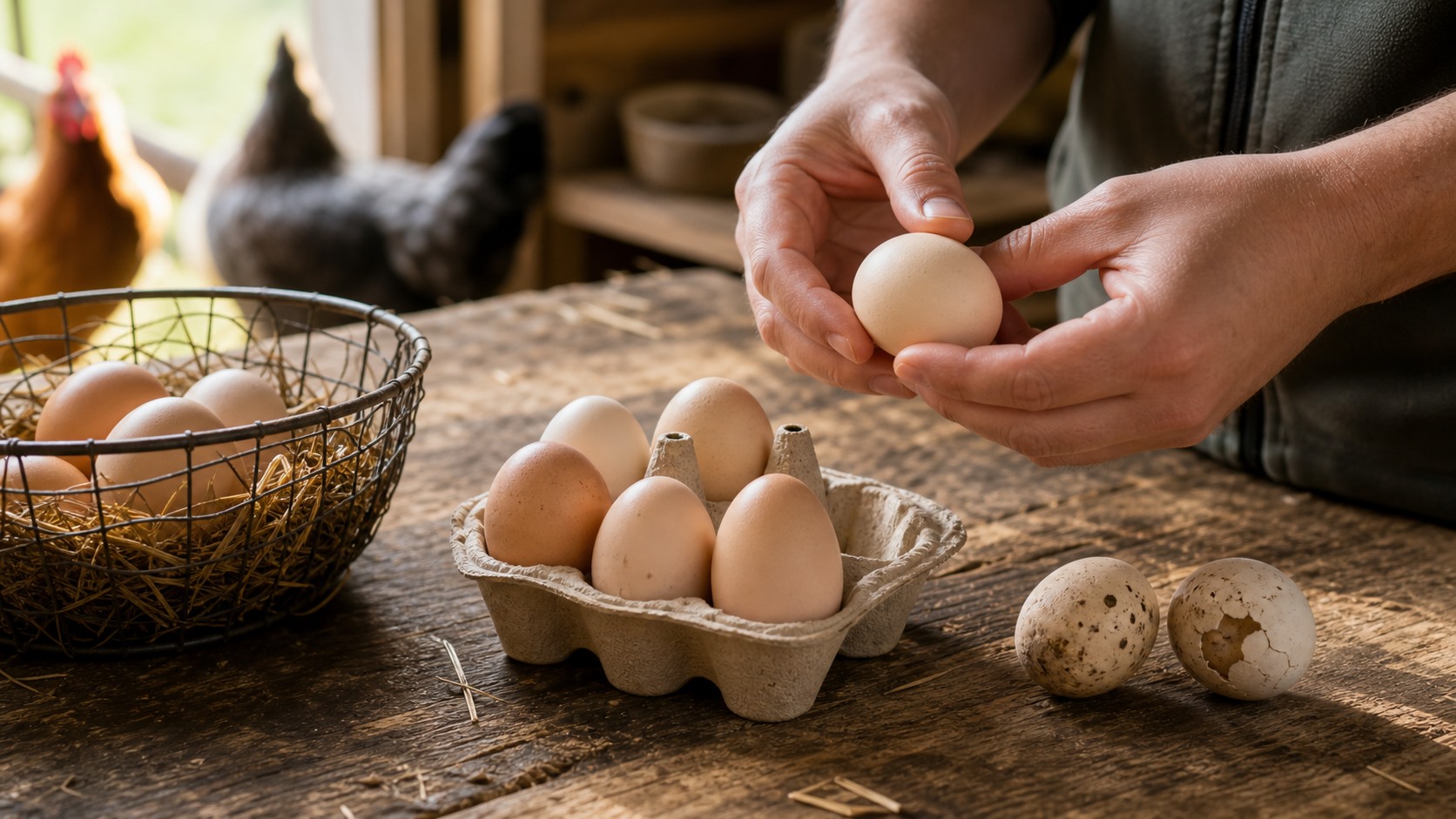
That is why choosing, storing and handling hatching eggs calmly matters so much. You are setting the hatch up before it ever reaches the tray.
Why the egg choice matters before the incubator is even switched on
A lot of people focus on temperature, humidity and turning, but the hatch often begins one step earlier than that. If the eggs were badly chosen, badly stored or damaged before they ever went into the incubator, you are already trying to win from a weaker starting point.
That is why choosing hatching eggs is not a minor detail. It is one of the cleanest ways to improve the whole hatch without touching the incubator settings at all.
What eggs are worth setting
I would choose eggs that are reasonably clean, normally shaped and from healthy laying hens. A good hatching egg should look like an egg that came from a flock running properly, not like a rescue project. Very pointed eggs, very round eggs, badly misshapen eggs, heavily soiled eggs or eggs with shell defects are weak candidates from the start.
That does not mean every imperfect egg is automatically hopeless. It means serious hatch work starts by being selective instead of sentimental.
What to reject
| Egg problem | Why it is a poor choice |
|---|---|
| Cracks or shell damage | The shell is the egg's protective system. Once it is compromised, the hatch starts under a disadvantage. |
| Very dirty shell | Heavy contamination increases risk and usually points to poor laying conditions for hatch work. |
| Odd shape | Extreme shape can reflect poor shell formation or reduce how normally the egg develops. |
| Very old storage | Fertility and hatch quality usually drop as storage stretches on. |
How to handle eggs before setting
Good hatching eggs should be stored carefully, not treated like table eggs waiting in the kitchen. They should rest in a cool, sensible place, be protected from rough handling and not be left for too long before setting. If eggs travelled or were shipped, a short settling period before incubation can also help.
I would also avoid aggressive washing. If an egg needs more than a light dry clean to be acceptable, it is often better to ask whether it should be set at all.
Why people lose quality at this stage
The most common reason is trying to be too generous. People keep obviously weak candidates because "maybe it will still hatch". Sometimes one does. But when the goal is a better hatch, you usually improve more by removing weak eggs than by hoping harder.
The second problem is storage. Even a good egg can lose some of its advantage if it is handled carelessly, kept too long or moved around too roughly.
My practical rule
If I would not trust the egg on sight and on shell quality, I would probably not set it. That one rule removes a lot of avoidable disappointment. A smaller tray of better eggs usually beats a larger tray of mixed hopefuls.
Fewer good eggs beat a full tray of doubtful eggs
A full incubator feels satisfying, but it is not always the best start. I would rather set fewer eggs that are clean, normal shaped and properly stored than fill every space with eggs that already look questionable. The incubator cannot fix a cracked shell, a very old egg or a badly stored egg.
Good selection also makes troubleshooting easier. If the hatch goes badly, you can look at temperature, humidity or fertility with a clearer head. If the egg selection was random from the beginning, every later conclusion becomes muddy.
Piotr Markot
Poultry breeder. I write practical notes from everyday small-flock keeping, without making the topic more complicated than it needs to be.
FAQ
Can dirty eggs be used for incubation?
Lightly soiled eggs are one thing, but heavily dirty eggs are poor candidates for serious hatch work.
Should I set cracked eggs if the crack looks small?
Usually no. Shell integrity matters too much to treat cracks lightly.
Do odd-shaped eggs matter?
Yes. Extreme shape is one of the common reasons to reject an egg for incubation.
Is it better to set more eggs just in case?
Not if many of them are weak candidates. Better eggs usually beat bigger numbers.
What this article is based on
Still have a question?
If you want to ask whether a batch of eggs looks worth setting or how long is too long to store them, you can write to me by email.