Australorp chickens: egg production, size and why people like them
 Piotr Markotpoultry breederFor practical backyard flocks
If you want a breed that feels steady, useful and not overly complicated, Australorp often lands high on the list. People know it for strong laying ability, calm behaviour and a body size that still feels useful in a dual-purpose flock.
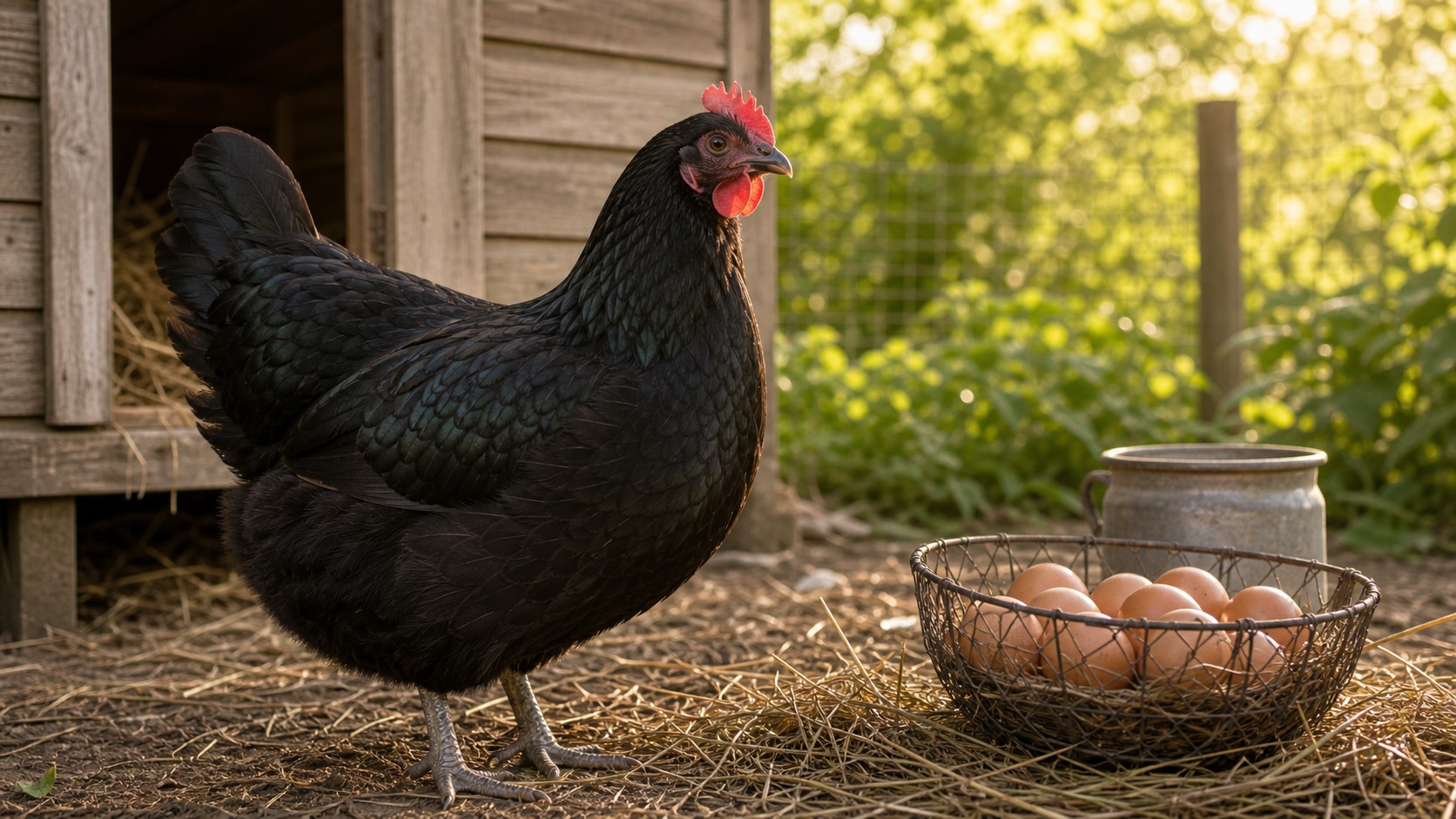
It is not a flashy novelty breed. That is exactly why many keepers like it.
Short version: why Australorps earn their reputation
- big strength: strong all-round balance,
- they often feel steadier than lighter, more reactive layers,
- they bring both usefulness and presence to a flock,
- they usually fit temperate backyard conditions well if the coop is dry and sensible.
What really makes Australorps different
Australorps are not exciting because they are rare or flashy. They are exciting because they are dependable in a way many backyard keepers grow to value more and more. They often feel like honest working hens: enough egg production to be worthwhile, enough size to feel substantial, and enough calm to make day-to-day flock life easier.
That kind of balance is easy to underestimate until you have lived with birds that are either more nervous, more fragile, or much less rounded in what they offer.
Expected laying from year 1 to year 5
Australorps can lay very well, but like every breed, they change with age. The most helpful way to think about them is not as a fixed number, but as a strong early performer that usually remains useful through later years.
| Laying year | Practical backyard range |
|---|---|
| Year 1 | Often around 220 to 280 eggs in a very solid first season. |
| Year 2 | Usually around 190 to 250 eggs, still very strong for a backyard hen. |
| Year 3 | Often around 160 to 220 eggs. |
| Year 4 | Commonly around 130 to 190 eggs. |
| Year 5 | Often around 100 to 150 eggs, while still remaining useful hens in many flocks. |
Those are realistic backyard ranges, not catalogue promises. Good line quality and sane flock management matter a lot.
Why they can suit backyard keepers better than some other breeds
The key word here is balance. Australorps often make more sense than lighter, more restless birds if you want a flock that feels stable and easy to live with. They also make more sense than purely ornamental breeds if you still want real practical output from the feed you are paying for.
That is why so many keepers recommend them even when they are not chasing breed novelty.
Useful husbandry tips for real-world conditions
Australorps usually do well in cooler, wetter climates when the coop stays dry and ventilation makes sense. They do not need special pampering, but like any good bird they stop looking impressive quickly if they are kept in wet litter, poor airflow or too much crowding.
They can also work well as a stabilising breed in mixed flocks because they often bring a calmer feel than more reactive hens do.
Would I recommend them?
Yes, very easily, especially for people who want a practical breed without fuss. Australorps are not just good on paper. They often become the kind of hens people quietly trust more with every season.
What I would ask before buying Australorps
Before buying Australorps, I would ask more than “how many eggs do they lay?”. I would ask about adult weight, temperament, winter laying, parent stock and whether the birds have been selected for a solid body as well as production. A good Australorp should feel like a balanced utility bird, not a nervous lightweight layer painted black.
For a backyard flock, calm behavior is a big part of the value. If the birds are steady, easy to handle and keep condition well, they are often more useful than a line that promises big egg numbers but falls apart under normal small-flock conditions.
Piotr Markot
Poultry breeder. I write practical notes from everyday small-flock keeping, without making the topic more complicated than it needs to be.
FAQ
Are Australorps good layers?
Yes. Their reputation is built on being strong practical layers, especially in the earlier seasons.
How heavy are Australorp hens?
Many mature hens fall roughly around 2.7 to 3.2 kg, though strain and condition matter.
Are Australorps calm?
Often yes. Calm temperament is one of the reasons backyard keepers like them.
Are Australorps better than lighter hybrids?
Not automatically better, but often more balanced if you want useful body size as well as good laying.
What this article is based on
Still have a question?
If you want to ask whether Australorps fit your flock or how they compare with another breed, you can write to me by email.