Silkie chickens: what they are like and whether they are worth keeping
 Piotr Markotpoultry breederFor small ornamental or mixed flocks
Silkies are one of those breeds people either fall in love with immediately or never quite understand. They look soft, unusual and almost unreal, and they bring a very different energy to a flock than a standard utility hen.
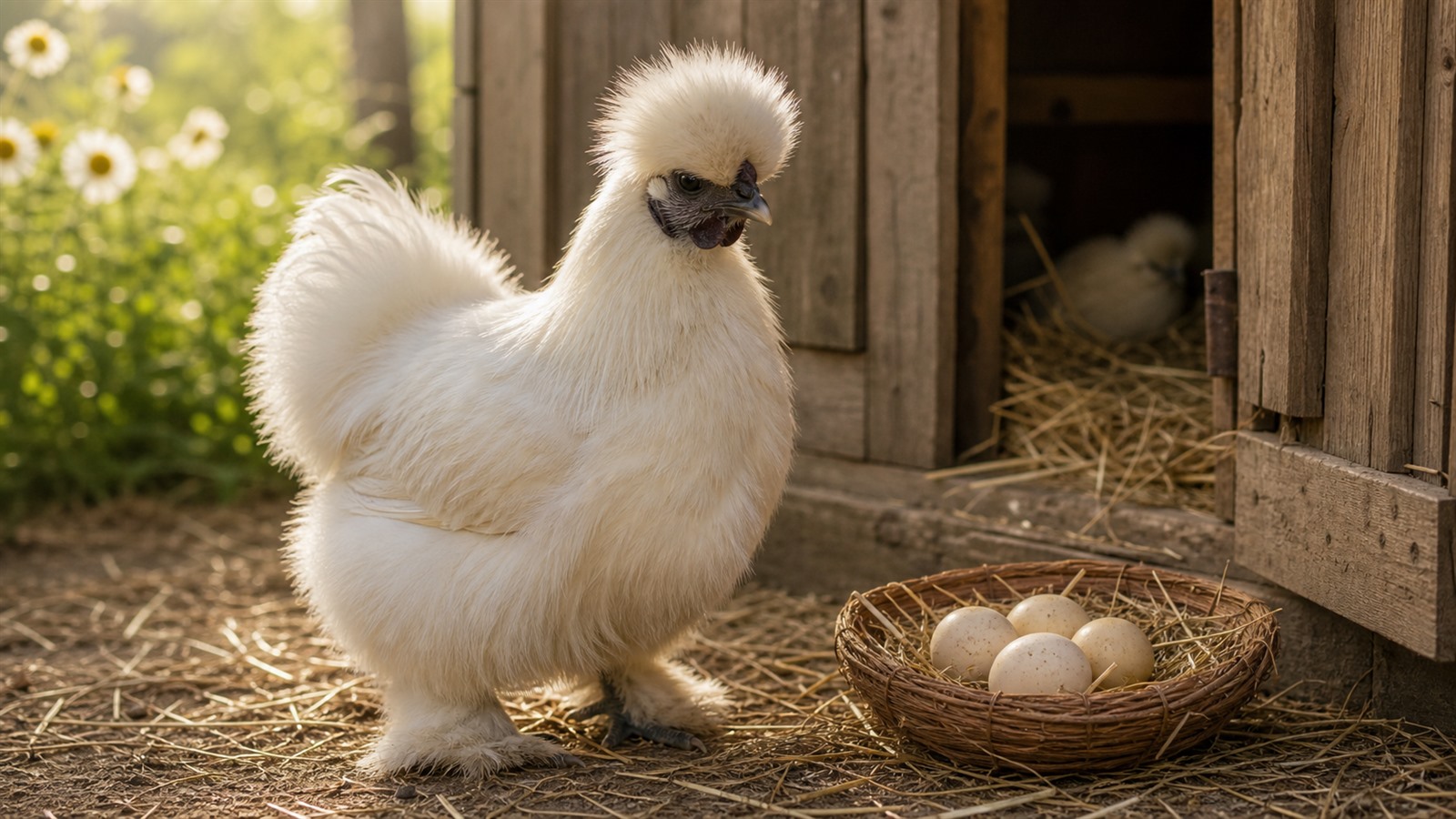
They are not the best choice if your only goal is a hard-working egg machine. But if you want a gentle, distinctive bird with strong broody instincts, they can be a very rewarding breed.
Short version: who Silkies are really for
- biggest strength: soft temperament and broody value,
- they lay small pale eggs, not heavy production numbers,
- they need dry, sensible conditions more than hard, wet rough handling,
- face fluff sometimes needs trimming so they can see feed and water properly.
What really makes Silkies special
People often fall for Silkies because they look unusual, soft and almost unreal next to standard chickens. That first impression is real, but the breed becomes much more interesting once you live with it. Silkies often bring a gentler rhythm to a flock and tend to suit people who enjoy birds for personality as much as output.
That also means they are easy to misunderstand. If someone buys them expecting a high-output layer, disappointment comes quickly. If someone buys them as a calm, characterful, broody breed, they often become favourites.
Expected laying from year 1 to year 5
Silkies are not big laying machines. Their egg numbers stay modest, and frequent broodiness can cut total yearly output even further. That does not make them poor birds. It just means you judge them on the right scale.
| Laying year | Practical backyard range |
|---|---|
| Year 1 | Often around 90 to 120 small pale eggs. |
| Year 2 | Usually around 80 to 110 eggs, depending partly on broodiness. |
| Year 3 | Often around 70 to 100 eggs. |
| Year 4 | Commonly around 60 to 85 eggs. |
| Year 5 | Often around 40 to 70 eggs, with more variation between birds. |
For Silkies, production is only one part of the story. Brooding ability and temperament matter just as much.
The practical issue many beginners overlook: seeing properly
One very real husbandry point with Silkies is feathering around the eyes. If the fluff is clearly blocking vision, trimming it lightly can make a real welfare difference. A bird that cannot see feed, water or flock movement properly is at a disadvantage, especially in a mixed group.
This is not cosmetic fussing. It is just good practical management when the feathers genuinely get in the way.
Backyard keeping tips that matter
Silkies usually do better in dry, cleaner conditions than many people assume. Their feathering is part of their charm, but it also means wet, muddy environments can become more of a nuisance for them than for tougher standard-feathered birds.
They also tend to do better in calmer flock setups. In very sharp, pushy groups, a quieter Silkie may struggle more than a more assertive breed would.
Would I recommend them?
Yes, for someone who values gentleness, broodiness and character. No, for someone who only wants a strong egg count. Silkies are wonderful when kept for what they truly are.
The small detail I would not ignore: vision
Silkies are charming, but that fluffy head can become a real welfare issue if feathers block the eyes. A bird that cannot see well may miss feed, react late to other hens and become stressed without looking obviously sick at first. In a small flock, I would check the face regularly.
If the crest or side feathers cover the eyes, careful trimming can make a huge difference. It is not about making the bird look perfect for photos; it is about making sure it can find food, water and the rest of the flock without struggling.
Piotr Markot
Poultry breeder. I write practical notes from everyday small-flock keeping, without making the topic more complicated than it needs to be.
FAQ
Are Silkies good layers?
Not compared with utility breeds. They are usually kept more for temperament, looks and broodiness than for heavy production.
Should I trim feathers around a Silkie's eyes?
If the bird is clearly struggling to see feed, water or flock movement, then yes, a careful trim can make a real practical difference.
Do Silkies cope well with wet weather?
They cope best when they stay dry. Their feather structure is not ideal for constant damp conditions.
Are Silkies good mothers?
Very often yes. Strong broodiness is one of the breed's best-known traits.
What this article is based on
Still have a question?
If you want to ask whether Silkies fit your flock or how to manage visibility, broodiness and wet weather, you can write to me by email.