Roll-away nest boxes for chickens: are they worth it?
 Piotr Markotpoultry breederBackyard coop routine
In a small flock, roll-away nest boxes can make life easier, but only if hens actually learn to use them. The box itself is not the whole answer. Training, placement and a few small habits matter just as much.
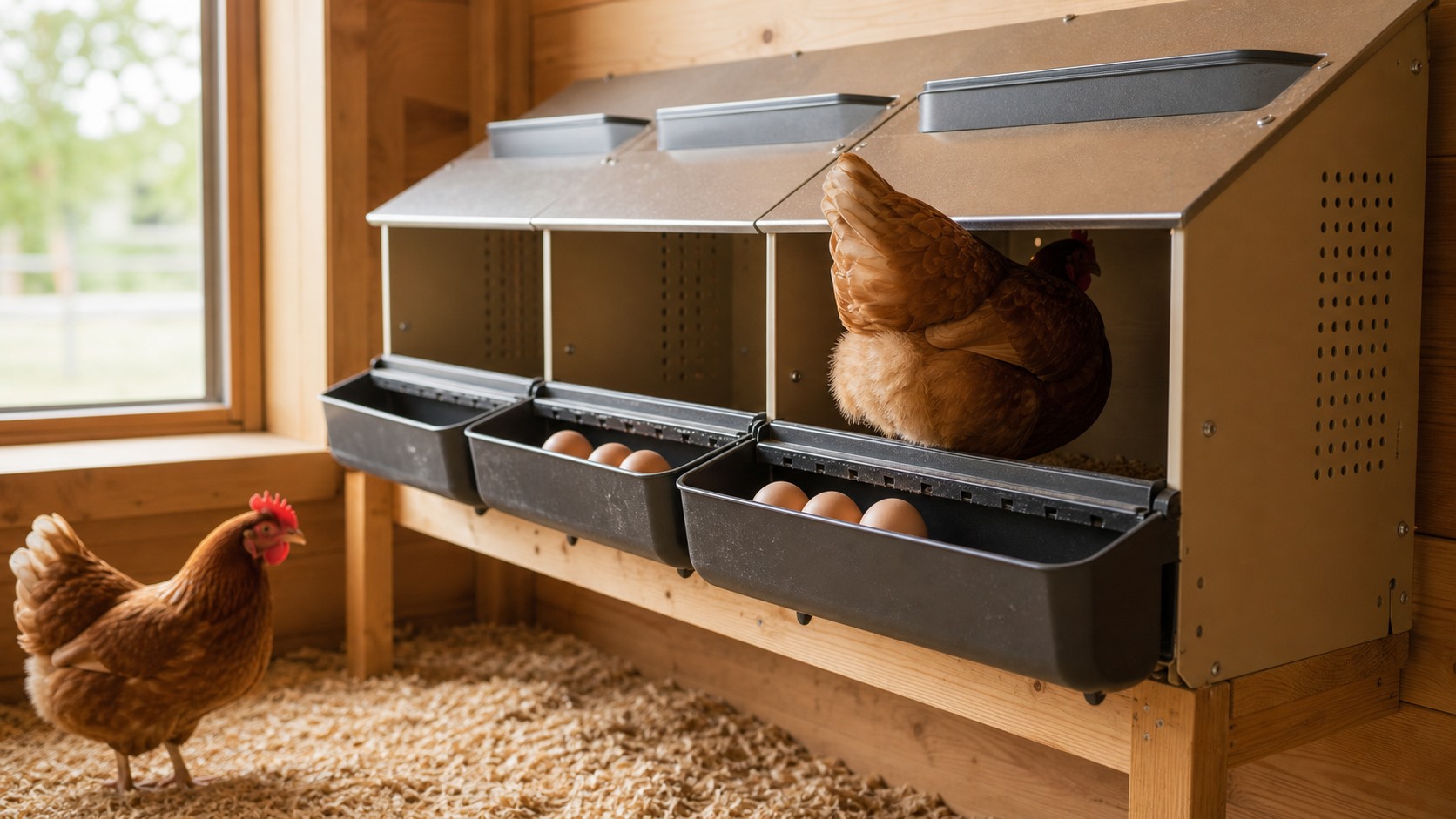
The biggest mistake is asking hens to learn the new nests while still leaving them easy floor spots, corners or cosy piles of bedding elsewhere in the coop. If hens are given random options, they usually take them.
Short answer
- raise the boxes clearly off the floor,
- do not leave attractive floor nests nearby,
- for the first week, a little straw inside can help hens accept them,
- once hens are laying there consistently, remove the loose straw and let the nest work as intended.
Why people like automatic nest boxes
The biggest practical advantage is simple: eggs roll away from the hen and end up cleaner, safer and easier to collect. In a real backyard coop that means fewer dirty shells, fewer cracks from hens stepping on fresh eggs and less temptation for egg-eating to start.
The second advantage shows up later, when routine cleaning becomes part of normal flock work. If eggs are not sitting exposed in the bedding, the whole system feels more controlled and easier to keep tidy.
Hens need to be taught where the new nest is
Many people install good nest boxes and then wonder why hens still lay on the floor. The answer is usually simple: the hens were given too many other comfortable options. During the learning period, do not leave cosy corners, loose straw piles or half-hidden spots that feel easier than the new nests.
For the first week, I would keep the message very clear. The proper nest is the only inviting nest in the coop. A small amount of straw inside the box can help that transition because it makes the new space feel familiar. Once the hens are confidently laying there, remove the loose material and leave the box cleaner and easier to sanitize.
Placement matters more than people think
| Setup detail | Why it matters |
|---|---|
| Raised off the ground | Hens read elevated nests as a clearer laying area. Boxes that sit too low can blend into the floor environment. |
| Quiet corner | Hens prefer a calm place where they are not constantly disturbed by traffic, feed bowls or active flock mates. |
| No random bedding nests | A comfortable floor corner can undo the whole training process. |
| Easy access for the keeper | If collecting and checking eggs is awkward, the system will slowly stop feeling like an upgrade. |
Wood versus plastic and metal
Wooden boxes can work well and many people like how simple they are. But from a hygiene point of view, smooth plastic and metal systems usually have the easier life. They are quicker to wipe, wash and disinfect, and they absorb less moisture and smell over time.
That difference matters even more in a busy coop, during wet weather or in any flock where boots, mud and dirty eggs are part of real life. If easy cleaning is high on your list, plastic and metal usually have the edge.
Common mistakes that ruin the setup
The first is putting the nests almost on the floor and then expecting hens to see them as special. The second is leaving straw everywhere during training, which tells hens that almost any corner is a nest. The third is changing too many things at once: new nests, new bedding, flock changes and a different routine all in one week.
Roll-away boxes work best when the message is boring and consistent. Same place, same access, same routine. Hens usually catch on surprisingly well when the setup is clear.
Who benefits the most from them
If you only keep a couple of hens and already collect spotless eggs from ordinary nests, you may not feel a dramatic difference. But if your flock is growing, eggs get dirty, or you want a tidier daily routine, roll-away nests start making much more sense.
Piotr Markot
Poultry breeder. I write practical notes from everyday small-flock keeping, without making the topic more complicated than it needs to be.

FAQ
Should roll-away nest boxes sit on the floor?
No. Hens usually accept them better when they are raised to a sensible height instead of blending into the bedding.
Should I leave straw inside forever?
No. A little straw can help for the first week, but once hens understand the nest, it is usually better to remove loose bedding and keep the box clean.
Why are hens still laying on the floor?
Most often because another spot still feels easier or more private than the new nest box.
Which material is easier to disinfect?
Plastic and metal are usually quicker and easier to wash and disinfect than wood.
Still have a question?
If you want to ask about nest box height, training hens or stopping floor eggs in your own coop, you can write to me by email.
Want cleaner egg records as well?
Your Farm helps you track where eggs are coming from, daily totals and simple notes around flock routines.