Why hens stop laying eggs: 12 causes and a practical backyard checklist
 Piotr Markotpoultry breederFor backyard keepers and small flocks
Hens stopped laying? Check daylight, molt, feed, calcium, water, stress, parasites and a simple 7-day plan for small flocks.
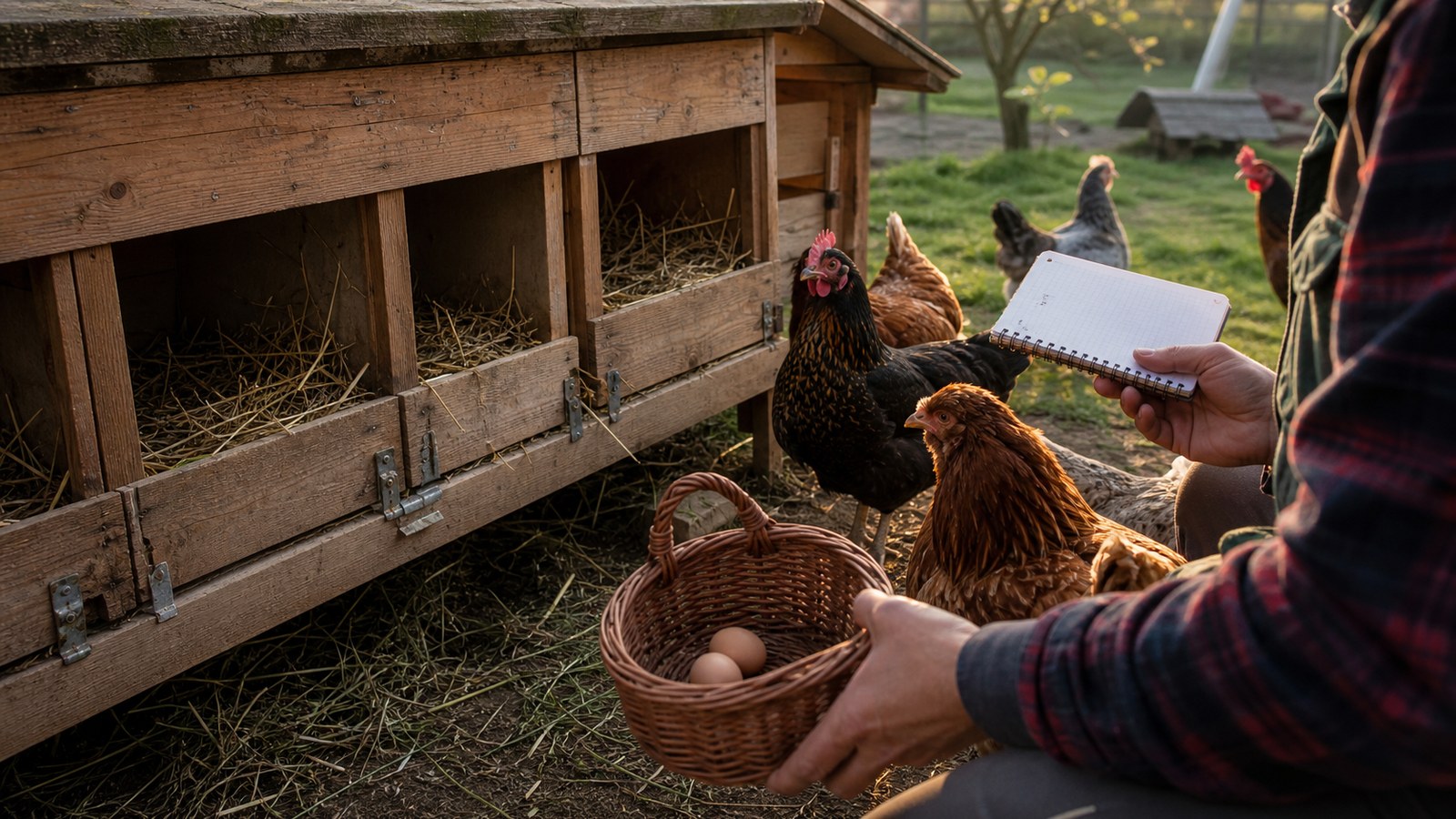
How I look at this as a keeper
When hens suddenly stop laying, it is very tempting to blame the first thing you see. The feed must be wrong, the hens must be ill, maybe the rooster is upsetting them, maybe someone online said they need a supplement. In a backyard flock, the answer is usually less dramatic and more practical.
The worst move is to change everything at once. New feed, extra vitamins, different nest boxes, added light, moved perches and a deep clean all on the same weekend may feel active, but it leaves you with no idea what actually helped.
So this guide is a calm checklist. We look at daylight, molt, feed, calcium, water, stress, parasites, hidden nests and real health signs. Then we make one sensible change at a time.
First decide whether it is truly a problem
In a small flock, a normal pause can look huge. If two hens molt and one young pullet is still irregular, the egg basket suddenly looks empty. That does not automatically mean disaster. It means you need numbers, not panic.
Write down eggs for a few days, then add the weather, any recent changes, feed changes and flock behaviour. Memory is not very reliable when you are annoyed at an empty nest box.
The quick answer for a busy keeper
If hens stop laying, check daylight, molt, water and feed first. Then look for parasites and hidden nests. If you also see lethargy, weight loss, diarrhea, coughing or odd breathing, treat it as a health issue rather than just an egg issue.
Backyard hens do best with rhythm: steady feeding, clean water, dry nest boxes, calm handling and no constant disruption. That boring routine often does more for eggs than random extras.
Why hens stop laying eggs: 12 causes and a practical plan
| Cause | What to check |
|---|---|
| Not enough daylight | Layers usually need a long and fairly steady day. In autumn and winter, fewer eggs can be normal without added light. |
| Molt | A hen growing new feathers spends energy on her body instead of eggs. During molt, laying can drop almost to zero. |
| Age of the flock | Pullets start unevenly and older hens slow down naturally. After the second season, numbers are rarely like a young layer's. |
| Weak feed | If the ration is mostly grain or short on protein, hens may look fine but lay fewer eggs. |
| Low calcium | Thin shells, shell-less eggs and a sudden dip should make you check calcium and grit access. |
| Water trouble | Dirty, frozen or hot water can reduce laying faster than many keepers expect. |
| Heat or cold | In harsh weather, a hen first deals with comfort and survival. Egg production comes second. |
| Stress | A new rooster, moving birds, a dog at the fence or constant chasing can show up in the egg basket a few days later. |
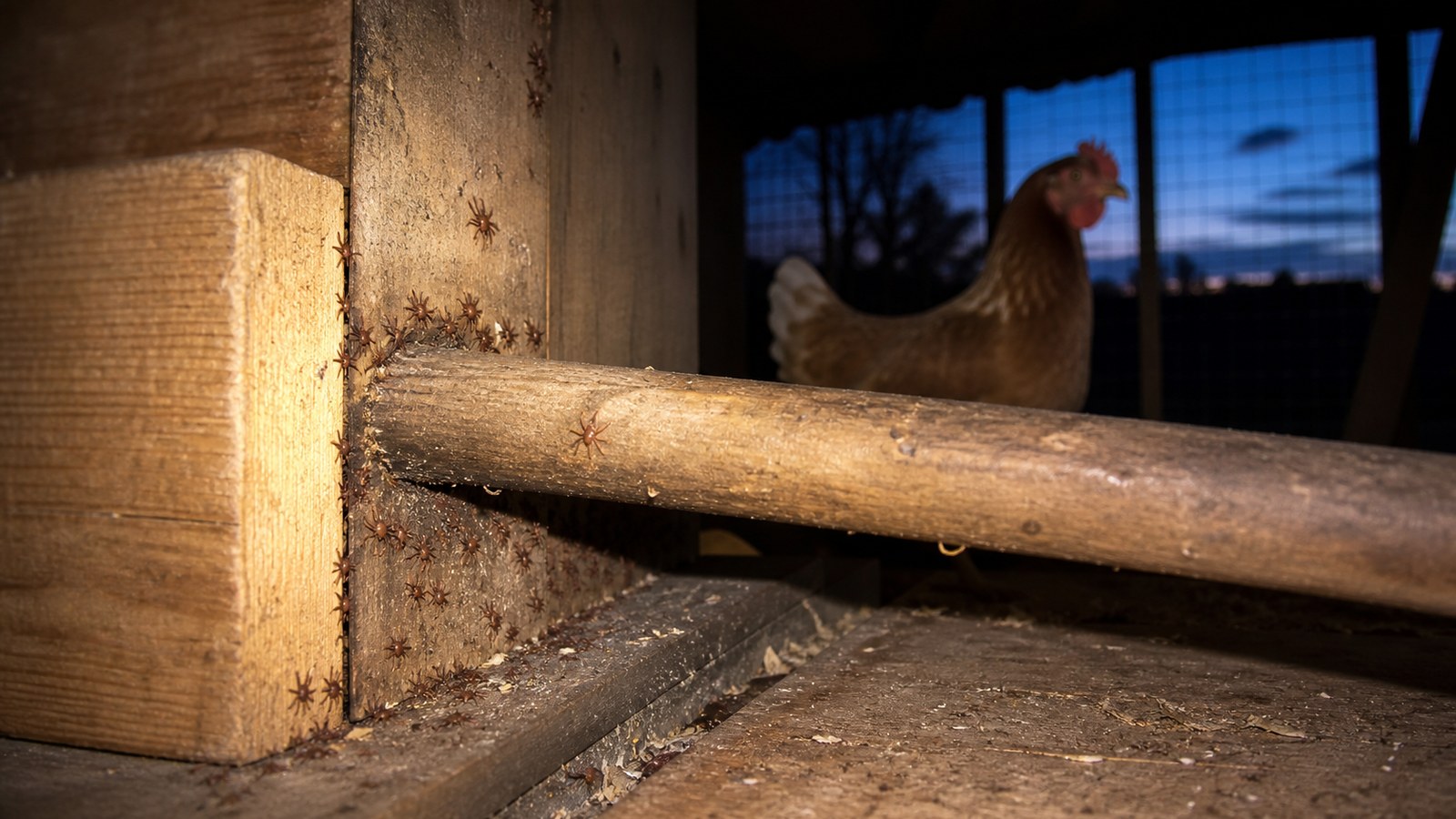
| Parasites | Red mites, lice and other parasites steal sleep, blood or energy. Condition and laying both suffer. |
| Illness | Lethargy, diarrhea, coughing, odd breathing or poor appetite should not be treated as a simple laying issue. |
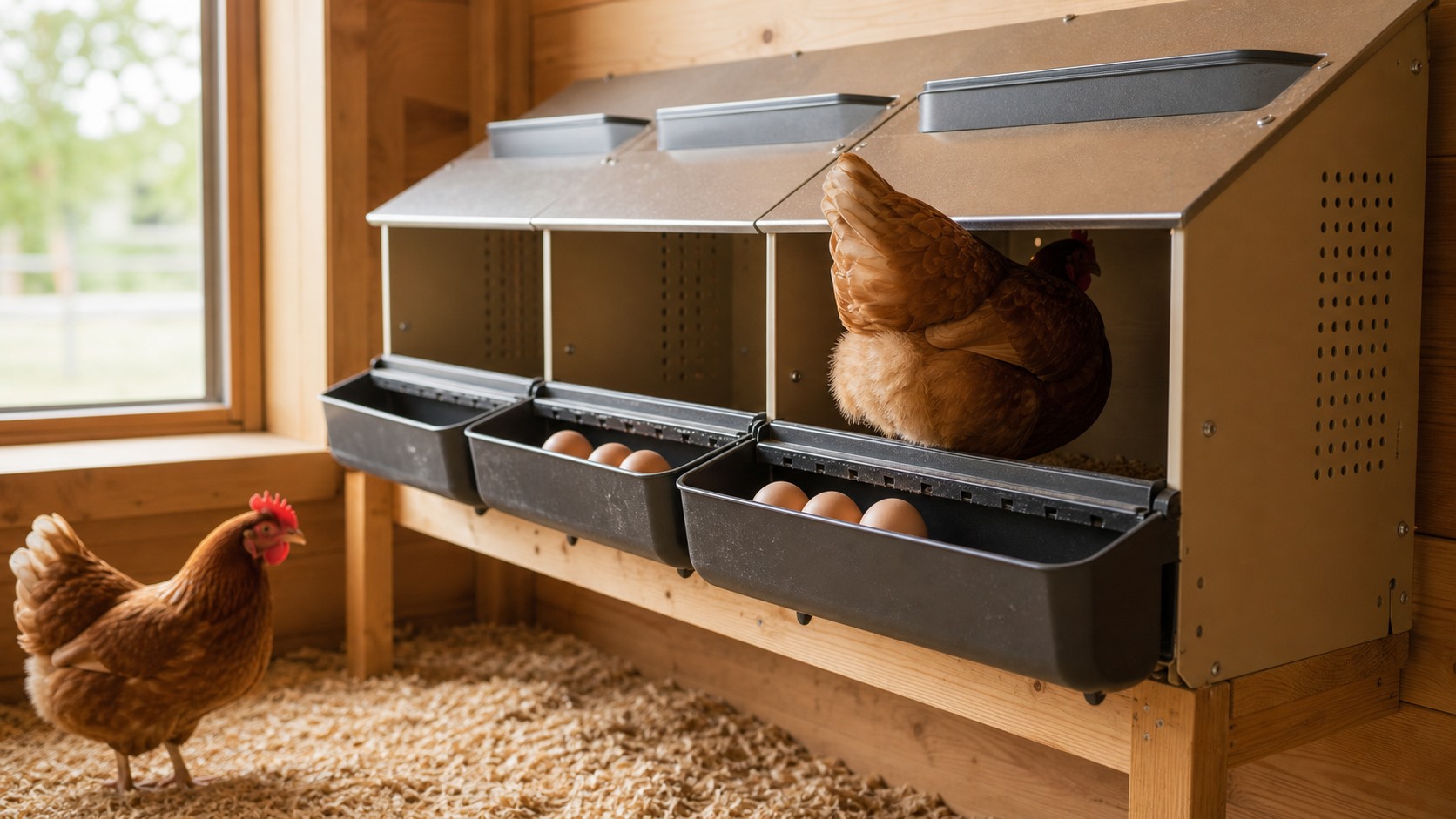
| Hidden nest | Sometimes hens are laying perfectly well, just not where you are looking. Straw piles and quiet corners are magnets. |
| Breed and season | Not every hen is a laying machine. Ornamental breeds, short days and natural rhythm can mean fewer eggs without a mistake. |
Daylight, season and natural rhythm
Hens are strongly influenced by day length. Short winter days can reduce laying even when feed is good. Some keepers add light, others let the flock rest. Both choices can be reasonable if they are done thoughtfully.
If you use light, keep it steady and gentle. Random lighting or sudden long days can create more stress than benefit. If you do not add light, accept that winter eggs may be fewer.
Feed, calcium and water
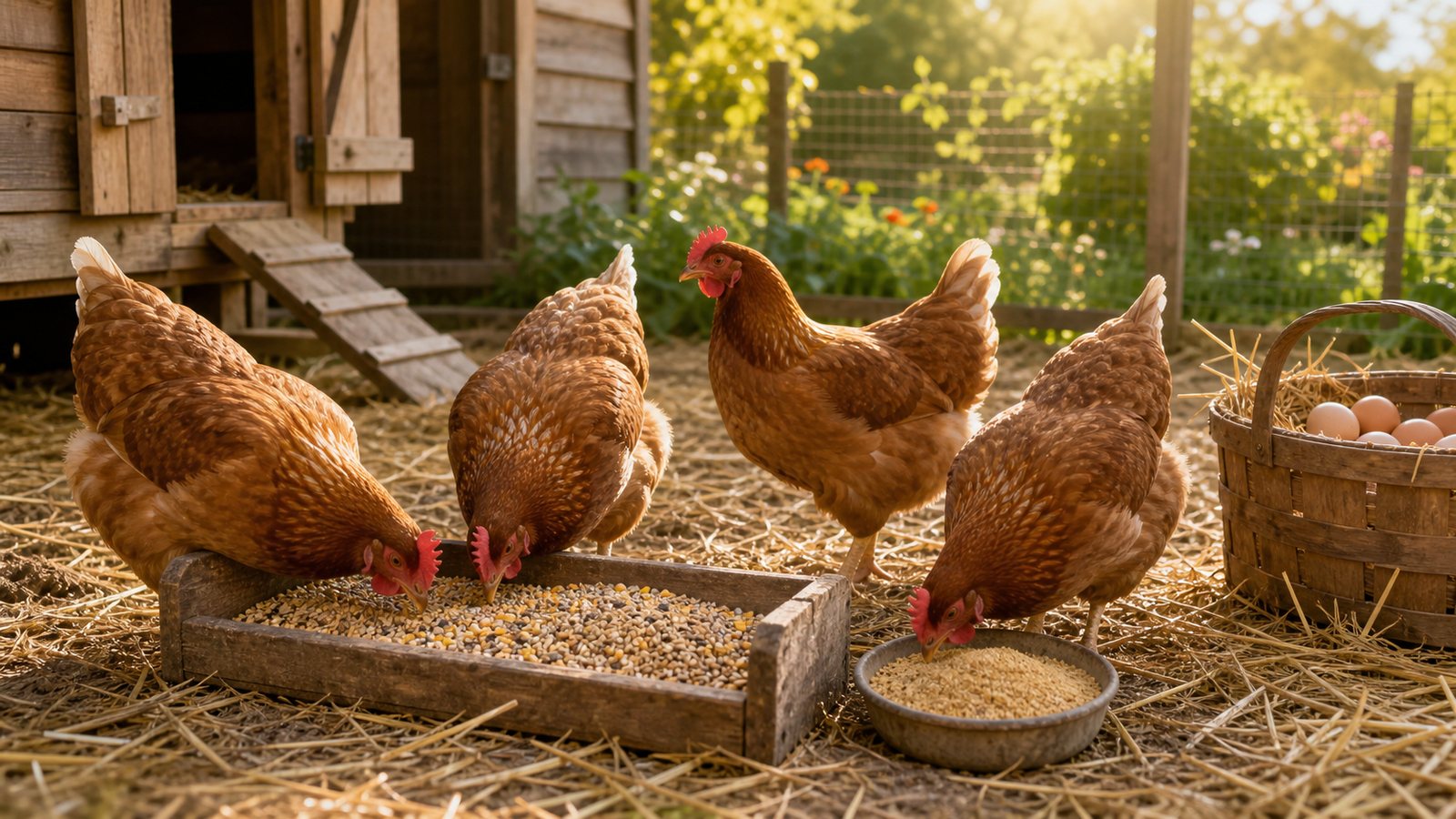
Every laying problem brings me back to the basics. Are hens eating a proper layer feed, or mostly grain and kitchen leftovers? Do they have separate calcium? Is clean water available in frost and heat?
Too many treats are a classic backyard mistake. Corn, bread, scraps and scratch grain can fill a hen but not provide everything needed to build an egg.
Stress, new birds and hidden nests
Hens dislike chaos. A new rooster, new birds, a move, a loud repair job or a dog running the fence can affect eggs a few days later.
Before deciding they stopped laying, search for hidden nests. Check hay, quiet corners, behind buckets, under platforms and anywhere a hen can disappear for twenty minutes.
Parasites and illness
A hen that sleeps badly because of red mites or loses condition to parasites will not lay at her best. Check perches after dark and look closely around the vent and under wings.
If egg loss comes with obvious illness signs, do not turn it into a supplement guessing game. Those birds need quick assessment and, when necessary, veterinary advice.
A 7-day action plan
| Step | What to do |
|---|---|
| Day 1 | Count eggs, check nest boxes, search for hidden laying spots and write down recent changes. |
| Day 2 | Check water morning and evening. Make sure it is clean, not frozen and not sitting in full sun. |
| Day 3 | Review feed. If the diet is mostly grain or scraps, make layer feed the base again. |
| Day 4 | Offer calcium separately so hens can take what they need without forcing it into every meal. |
| Day 5 | Inspect perches after dark for red mites or other signs of parasites. |
| Day 6 | Watch behaviour. Is one hen bullied? Is a rooster too intense? Is the flock nervous? |
| Day 7 | Compare notes. If things improve, stop changing. If illness signs appear, act faster. |
A few more notes from the coop
My own rule is to check boring things first. Water, feed, light, calm nest boxes and dry bedding solve more problems than fancy theories.
Separate a flock-wide problem from a single-hen problem. If everyone drops, I look at conditions. If one bird changes, I look at that bird closely.
Egg notes seem unnecessary until the basket changes. Then they show whether the dip started after heat, a feed switch, a new rooster or a move.
Do not expect an instant rebound. A useful correction in feed, light or stress may take days or weeks to show clearly.
Pullets can be irregular at the start. Small eggs, odd pauses and strange timing are common while the laying system settles.
Older hens should not be judged like first-year layers. Comfort and diet matter, but age still changes production.
A sudden dip plus poor condition is the worrying combination. Fewer eggs alone is one thing; fewer eggs with lethargy or weight loss is another.
Watch the birds, not only the basket. Behaviour often shows the cause before the egg count does.
Morning checks matter
With a drop in laying, I do not start with big decisions. I start with a morning round: how the birds leave the coop, whether they eat, whether one hen stands apart and whether fewer eggs in the basket is repeating. Ordinary observation often beats a dramatic guess.
Evening tells a different story
A coop can look one way in the morning and another after dark. That is why I come back in the evening and check nest boxes, water, feed and perches. Roosting behaviour, smell, calmness and tiny marks in corners help separate a normal day from a problem building quietly.
Change one thing at a time
The worst habit is throwing random supplements at the flock and hoping for a miracle. I prefer one change, a date in the notes and a few days of watching. If things improve, I know what probably helped. If not, the next step is cleaner.
Notes are boring but useful
In a small flock, feelings are easy to remember and details are not. Date, weather, egg count, bedding condition, behaviour and the last change in the coop become a map after a week. Without that map, you circle the same doubts.
Not every pause is a failure
Hens have seasons, off days and natural pauses. The issue becomes serious when signs repeat, condition drops or several clues appear together. One weaker day is not a panic button, but a pattern deserves attention.
Look at flock and individual birds
If every hen changes, I look at conditions. If one bird changes, I inspect that bird. This simple split prevents treating the whole coop for one hen's problem or missing a flock-wide cause.
Comfort changes results
Dry bedding, air without draught, calm nest boxes and easy water access do not sound exciting, but they work. With a drop in laying, comfort often helps more than a clever product bought in a hurry.
Small signs are not useless
Small clues often arrive before the obvious problem. A hen avoids the perch, the basket looks lighter, bedding smells different, one bird hides at feeding. Alone they may be nothing; together they form a picture.
When to speed up
If you also see lethargy, weight loss, pale combs, breathing trouble, diarrhea or a fast decline in several birds, I would not wait a relaxed week. Check conditions, separate weak birds if needed and get veterinary advice when the picture points that way.
When to wait calmly
If birds are lively, eating, drinking and moving normally, and the change is moderate, a slower plan is sensible. Observation and one correction at a time beat buying everything recommended in a comment thread.
Come back after a week
I do not close the subject on the first better day. After a week, I check whether the improvement held, whether signs returned and whether a new issue appeared. A coop is a living system, not an on-off switch.
The simplest takeaway
A good keeper does not need to do everything perfectly. The key is noticing change and avoiding chaos. With a drop in laying, calm consistency wins: look, write it down, correct one thing, then judge the result.
Observation log
With a drop in laying, it helps to watch the pattern, not only one morning. If fewer eggs in the basket happens once, I write it down and keep watching. If it repeats, I check nest boxes, water, feed and perches more carefully and make one clear correction. Only after that kind of check is it easier to separate a real cause from a coincidence.
I do not like panic-driven action. throwing random supplements at the flock creates movement but not much knowledge. A better order is observation, note, basic check, one change and only then judging the result. This is slower, but in real coops it usually means fewer mistakes and less stress.
In a small coop, every detail is visible because the flock is small. One weaker hen, one damp corner of bedding or one conflict at feeding can change the picture. I judge the whole context, not only the final number. That is why a few simple notes beat ten pieces of advice you cannot compare later.
If conditions are good, birds are lively and signs are not getting worse, I give the flock some time. If the issue deepens, I do not wait for luck. Hens often show discomfort before the keeper admits there is a pattern. If something returns seasonally, notes reveal it faster and more calmly than memory.
Routine without panic
The best notes are short. You do not need an essay every day. Date, egg count or symptom, feed, weather and what changed are enough. After two weeks, those small lines make a very useful picture. In a small flock, every decision shows, so it is worth making it deliberately.
Compare similar days with similar days. Do not compare a freezing morning with a hot afternoon or a stressful moving day with a quiet week. With a drop in laying, background conditions change the meaning of what you see. The best routine is one you can repeat tomorrow, next week and next month.
I like asking whether the issue is environment, nutrition, health or flock behaviour. That one question organizes the whole check and stops you from jumping between random ideas. The point is not to make chicken keeping complicated, but to make the basics reliable.
When I check something, I try to do it properly. Water means morning and evening. nest boxes, water, feed and perches means actually looking into corners, not glancing from the door. Over time, this rhythm teaches you what normal really looks like in your own coop.
Checking conditions
With a drop in laying, it helps to watch the pattern, not only one morning. If fewer eggs in the basket happens once, I write it down and keep watching. If it repeats, I check nest boxes, water, feed and perches more carefully and make one clear correction. Only after that kind of check is it easier to separate a real cause from a coincidence.
I do not like panic-driven action. throwing random supplements at the flock creates movement but not much knowledge. A better order is observation, note, basic check, one change and only then judging the result. This is slower, but in real coops it usually means fewer mistakes and less stress.
In a small coop, every detail is visible because the flock is small. One weaker hen, one damp corner of bedding or one conflict at feeding can change the picture. I judge the whole context, not only the final number. That is why a few simple notes beat ten pieces of advice you cannot compare later.
If conditions are good, birds are lively and signs are not getting worse, I give the flock some time. If the issue deepens, I do not wait for luck. Hens often show discomfort before the keeper admits there is a pattern. If something returns seasonally, notes reveal it faster and more calmly than memory.
Decisions after a few days
The best notes are short. You do not need an essay every day. Date, egg count or symptom, feed, weather and what changed are enough. After two weeks, those small lines make a very useful picture. In a small flock, every decision shows, so it is worth making it deliberately.
Compare similar days with similar days. Do not compare a freezing morning with a hot afternoon or a stressful moving day with a quiet week. With a drop in laying, background conditions change the meaning of what you see. The best routine is one you can repeat tomorrow, next week and next month.
I like asking whether the issue is environment, nutrition, health or flock behaviour. That one question organizes the whole check and stops you from jumping between random ideas. The point is not to make chicken keeping complicated, but to make the basics reliable.
When I check something, I try to do it properly. Water means morning and evening. nest boxes, water, feed and perches means actually looking into corners, not glancing from the door. Over time, this rhythm teaches you what normal really looks like in your own coop.
Observation log
With a drop in laying, it helps to watch the pattern, not only one morning. If fewer eggs in the basket happens once, I write it down and keep watching. If it repeats, I check nest boxes, water, feed and perches more carefully and make one clear correction. Only after that kind of check is it easier to separate a real cause from a coincidence.
I do not like panic-driven action. throwing random supplements at the flock creates movement but not much knowledge. A better order is observation, note, basic check, one change and only then judging the result. This is slower, but in real coops it usually means fewer mistakes and less stress.
In a small coop, every detail is visible because the flock is small. One weaker hen, one damp corner of bedding or one conflict at feeding can change the picture. I judge the whole context, not only the final number. That is why a few simple notes beat ten pieces of advice you cannot compare later.
If conditions are good, birds are lively and signs are not getting worse, I give the flock some time. If the issue deepens, I do not wait for luck. Hens often show discomfort before the keeper admits there is a pattern. If something returns seasonally, notes reveal it faster and more calmly than memory.
Routine without panic
The best notes are short. You do not need an essay every day. Date, egg count or symptom, feed, weather and what changed are enough. After two weeks, those small lines make a very useful picture. In a small flock, every decision shows, so it is worth making it deliberately.
Compare similar days with similar days. Do not compare a freezing morning with a hot afternoon or a stressful moving day with a quiet week. With a drop in laying, background conditions change the meaning of what you see. The best routine is one you can repeat tomorrow, next week and next month.
I like asking whether the issue is environment, nutrition, health or flock behaviour. That one question organizes the whole check and stops you from jumping between random ideas. The point is not to make chicken keeping complicated, but to make the basics reliable.
When I check something, I try to do it properly. Water means morning and evening. nest boxes, water, feed and perches means actually looking into corners, not glancing from the door. Over time, this rhythm teaches you what normal really looks like in your own coop.
What to record
Record the date, egg count, feed changes, weather, treatments, coop cleaning and unusual behaviour. After a month, those notes beat memory.

FAQ
Do hens stop laying in winter?
Yes. Many flocks lay less in winter because days are shorter. It can be normal if birds otherwise look healthy.
Can feed reduce laying?
Yes. A diet based mostly on grain or scraps can be short on protein, calcium or balance for steady laying.
When should I call a vet?
Call when fewer eggs come with lethargy, weight loss, diarrhea, breathing trouble, swelling or fast decline.
What this guide is based on
Still have a question about your flock?
If you want to ask about your own coop, you can email me. The address appears only after a click, so it is not sitting openly in the page source for simple scraping bots.
Want flock notes, eggs and daily checks in one place?
Your Farm helps you keep egg records, observations, costs and coop notes together, so decisions are based on your own flock instead of guesswork.