Should you insulate a chicken coop?
 Piotr Markotpoultry breederTemperate and colder backyard climates
Insulating a coop sounds like an obvious upgrade, but in small flocks the real answer is not just "more insulation is better". A badly insulated coop can trap damp air and create a nastier winter problem than cold itself.
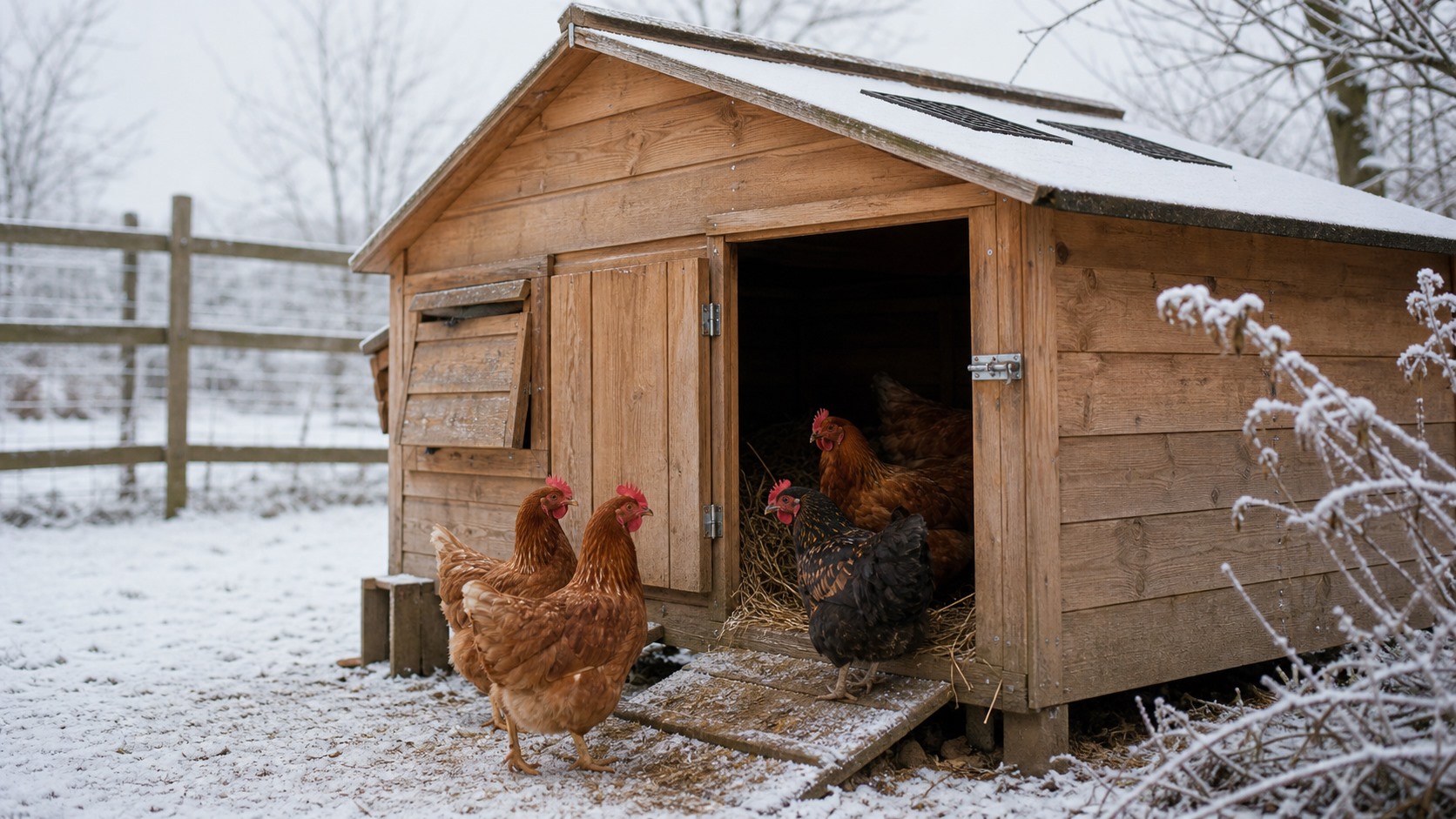
That is why I always think about insulation together with ventilation, dryness and drafts. A dry, well-aired coop with no direct draft often beats a heavily packed coop that stays damp.
Short answer
- insulation can help if the building is very exposed and temperatures swing hard,
- bad insulation without ventilation often creates damp, stale air and condensation,
- moisture is usually more dangerous than plain cold,
- in many backyard coops, sealing every gap is a worse mistake than leaving the building a little cooler.
What people often get wrong about winter coops
Many keepers imagine that hens suffer mainly because the coop is not warm enough. In reality, adult hens usually handle cold better than people expect when they are dry, protected from wind and housed in a coop with sensible ventilation. The bigger danger is a damp coop where warm moist air has nowhere to go.
That is why some heavily sealed coops perform worse than simpler ones. Once moisture from droppings, breath and wet boots starts building up, you get condensation, stale air and sometimes frost inside the building itself. That is not a better winter environment just because the wall has insulation behind it.
When insulation genuinely helps
Insulation becomes more useful when the coop is lightweight, exposed and subject to sharp swings in temperature from day to night. In those situations it can make the interior more stable and reduce how quickly the building loses warmth after sunset.
It can also help if the roof or walls otherwise sweat badly in cold weather. But the insulation only helps when the whole system still lets moisture escape. If you insulate and then choke airflow, you have simply traded one problem for another.
When insulation can make things worse
| Mistake | Why it backfires |
|---|---|
| Sealing the coop too tightly | Moisture builds up fast and the air quality drops even if the coop feels less cold. |
| Ignoring roof condensation | Water dripping back into the coop creates a colder, dirtier environment than dry outside air. |
| Using indoor comfort as the goal | Hens do not need a heated living room. They need dry bedding, good air and no direct draft over the roost. |
| Adding heat instead of fixing airflow | Warmth can hide a wet-air problem without actually solving it. |
What matters more than insulation
I would first check four things: is the roof staying dry inside, are the roosts out of direct draft, does stale moisture have a way out near the top of the coop, and is bedding staying reasonably dry? If those basics are wrong, insulation alone will not save the winter setup.
In many backyard coops, the smartest move is not heavy insulation but a cleaner balance between weather protection and ventilation. A coop can be cool and still be healthy. A wet coop is a problem even when it feels warmer.
A sensible decision rule
If your coop is dry, wind-protected and stable through winter, you may not need to insulate much at all. If it is a thin, exposed structure that swings quickly with every cold night and sunny day, insulation may be worth doing. Just make sure you are improving stability without trapping moisture inside.
Piotr Markot
Poultry breeder. I write practical notes from everyday small-flock keeping, without making the topic more complicated than it needs to be.

FAQ
Do chickens need a warm coop in winter?
Usually not. Adult hens cope with cold much better than they cope with damp, stale air and direct draft.
Can insulation hurt instead of help?
Yes, when it reduces ventilation and traps moisture inside the coop.
What is the bigger danger in winter: cold or damp?
For many backyard coops, damp air and condensation create more trouble than plain cold.
Should I seal every gap in the coop?
No. You want to control direct draft on the birds, not eliminate all airflow.
What this article is based on
Still have a question?
If you want to ask whether your coop needs insulation or whether the real issue is ventilation and damp, you can write to me by email.