Red mites in a chicken coop: symptoms, the night test and how to fight them step by step
 Piotr Markotpoultry breederFor backyard keepers and small flocks
How to spot poultry red mites, check perches at night, find hiding places in woodwork and clean the coop with a calm plan.
How I look at this as a keeper
Red mites are one of those coop problems that can build quietly before the keeper really understands what is happening. During the day the hens may look fairly normal, but at night the mites come out to feed.
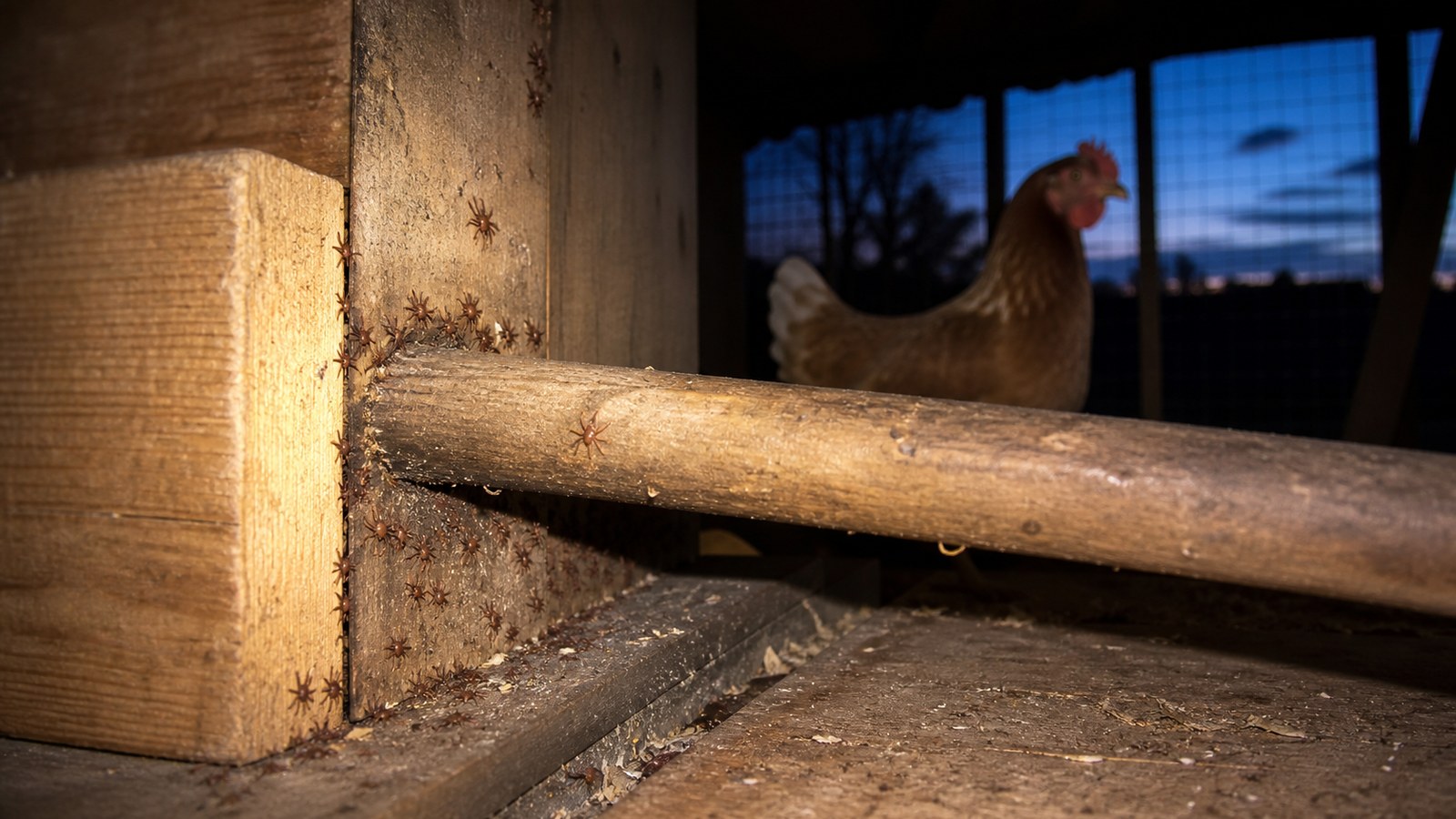
The tricky part is that red mites often live in the coop, not on the bird all day. They hide in cracks, perch ends, nest box seams and timber joins, then move onto hens after dark.
This guide is practical: how to suspect them, how to do a night check, where to look, how to clean and how to avoid random product chaos.
What red mites are and why they are so sneaky
Poultry red mites are blood-feeding mites. Their best trick is hiding away from the hen during the day. That is why a midday bird check can look normal while the coop is full of trouble.
If you suspect them, inspect the structure: cracks, screw holes, perch ends, brackets, nest box corners and every place where timber meets timber.
The night test that actually helps
After dark, take a torch and a white tissue. Wipe under the perch and around the ends where it touches the wall. Red or brown smears are suspicious.
You can also place white paper or tape near a perch end overnight. In the morning, tiny dots or smears can show where activity is happening.
Red mites in a chicken coop: symptoms, night test and plan
| Sign | What it may mean |
|---|---|
| Restless nights | Hens shuffle on the perch, avoid their usual roost or look tired in the morning. |
| Paler combs | With heavy parasite pressure, birds can lose condition and combs may look less bright. |
| Fewer eggs | A flock that sleeps badly and loses energy often lays less or becomes less regular. |
| Dots around perches | Red, brown or grey dots in timber cracks, under perches and near nest boxes are a warning sign. |
| Marks on eggs | Tiny smudges or traces from crushed mites can sometimes appear on shells. |
| Crawling feeling on skin | After coop work, you may feel something on your hands. It is not proof alone, but it is a reason to check. |
Why one quick sprinkle is rarely enough
Red mites win through cracks. Treat only the visible flat surface and you may leave the real hiding places untouched.
Think in layers: remove bedding, clean mechanically, wash where appropriate, dry fully, treat safe areas according to label, then repeat the inspection.
Protecting hens while you clean
Birds come first. Pale, weak or badly bitten hens need calm, good feed, clean water and close watching, not just a prettier coop.
Never use random garden or shed products around poultry. Only use products suitable for poultry housing and follow the label exactly.
Prevention after the outbreak is controlled
Once the coop is clean, make checks boring and regular. Look under perches, keep bedding dry, limit wild birds around feed and inspect second-hand equipment before it enters the coop.
A coop that comes apart is easier to keep safe. Removable perches and smooth surfaces are less romantic than rustic decoration, but they are much more practical.
Step-by-step control plan
| Step | What to do |
|---|---|
| Step 1 | Check at night with a torch and white tissue, especially under perches and in cracks. |
| Step 2 | Remove bedding carefully and avoid carrying contaminated material all over the yard. |
| Step 3 | Scrub perches, nest boxes, corners and timber joints mechanically. |
| Step 4 | Use only poultry-house-safe products and follow the label around birds and eggs. |
| Step 5 | Let the coop dry properly, because dampness invites more trouble. |
| Step 6 | Repeat checks after a few days; one clean rarely ends the issue forever. |
| Step 7 | Record the date, signs and action so you can spot seasonal returns. |
A few more notes from the coop
The danger with red mites is waiting too long. Hens may still walk, eat and look acceptable while their nights are awful.
Do not judge only in daylight. A torch at the perch end tells you far more than a quick look at noon.
A removable perch is a gift to future you. If it can be lifted out, cleaned and dried, control becomes much easier.
After cleaning, check again. Two or three follow-up checks are more useful than one heroic clean and a celebration.
If it returns every warm season, write down dates and weather. Patterns help you prepare earlier next time.
Heavy infestation is not just dirt. It is real pressure on birds, especially small, old or already stressed hens.
Do not mix several products at once. It is risky and also hides which action actually worked.
The best prevention is dull: dry bedding, fewer cracks, regular checks and notes when something looks suspicious.
Morning checks matter
With red mites, I do not start with big decisions. I start with a morning round: how the birds leave the coop, whether they eat, whether one hen stands apart and whether restless nights and dots around perches is repeating. Ordinary observation often beats a dramatic guess.
Evening tells a different story
A coop can look one way in the morning and another after dark. That is why I come back in the evening and check cracks, perch ends and nest boxes. Roosting behaviour, smell, calmness and tiny marks in corners help separate a normal day from a problem building quietly.
Change one thing at a time
The worst habit is random spraying without a plan and hoping for a miracle. I prefer one change, a date in the notes and a few days of watching. If things improve, I know what probably helped. If not, the next step is cleaner.
Notes are boring but useful
In a small flock, feelings are easy to remember and details are not. Date, weather, egg count, bedding condition, behaviour and the last change in the coop become a map after a week. Without that map, you circle the same doubts.
Not every pause is a failure
Hens have seasons, off days and natural pauses. The issue becomes serious when signs repeat, condition drops or several clues appear together. One weaker day is not a panic button, but a pattern deserves attention.
Look at flock and individual birds
If every hen changes, I look at conditions. If one bird changes, I inspect that bird. This simple split prevents treating the whole coop for one hen's problem or missing a flock-wide cause.
Comfort changes results
Dry bedding, air without draught, calm nest boxes and easy water access do not sound exciting, but they work. With red mites, comfort often helps more than a clever product bought in a hurry.
Small signs are not useless
Small clues often arrive before the obvious problem. A hen avoids the perch, the basket looks lighter, bedding smells different, one bird hides at feeding. Alone they may be nothing; together they form a picture.
When to speed up
If you also see lethargy, weight loss, pale combs, breathing trouble, diarrhea or a fast decline in several birds, I would not wait a relaxed week. Check conditions, separate weak birds if needed and get veterinary advice when the picture points that way.
When to wait calmly
If birds are lively, eating, drinking and moving normally, and the change is moderate, a slower plan is sensible. Observation and one correction at a time beat buying everything recommended in a comment thread.
Come back after a week
I do not close the subject on the first better day. After a week, I check whether the improvement held, whether signs returned and whether a new issue appeared. A coop is a living system, not an on-off switch.
The simplest takeaway
A good keeper does not need to do everything perfectly. The key is noticing change and avoiding chaos. With red mites, calm consistency wins: look, write it down, correct one thing, then judge the result.
Observation log
With red mites, it helps to watch the pattern, not only one morning. If restless nights and dots around perches happens once, I write it down and keep watching. If it repeats, I check cracks, perch ends and nest boxes more carefully and make one clear correction. Only after that kind of check is it easier to separate a real cause from a coincidence.
I do not like panic-driven action. random spraying without a plan creates movement but not much knowledge. A better order is observation, note, basic check, one change and only then judging the result. This is slower, but in real coops it usually means fewer mistakes and less stress.
In a small coop, every detail is visible because the flock is small. One weaker hen, one damp corner of bedding or one conflict at feeding can change the picture. I judge the whole context, not only the final number. That is why a few simple notes beat ten pieces of advice you cannot compare later.
If conditions are good, birds are lively and signs are not getting worse, I give the flock some time. If the issue deepens, I do not wait for luck. Hens often show discomfort before the keeper admits there is a pattern. If something returns seasonally, notes reveal it faster and more calmly than memory.
Routine without panic
The best notes are short. You do not need an essay every day. Date, egg count or symptom, feed, weather and what changed are enough. After two weeks, those small lines make a very useful picture. In a small flock, every decision shows, so it is worth making it deliberately.
Compare similar days with similar days. Do not compare a freezing morning with a hot afternoon or a stressful moving day with a quiet week. With red mites, background conditions change the meaning of what you see. The best routine is one you can repeat tomorrow, next week and next month.
I like asking whether the issue is environment, nutrition, health or flock behaviour. That one question organizes the whole check and stops you from jumping between random ideas. The point is not to make chicken keeping complicated, but to make the basics reliable.
When I check something, I try to do it properly. Water means morning and evening. cracks, perch ends and nest boxes means actually looking into corners, not glancing from the door. Over time, this rhythm teaches you what normal really looks like in your own coop.
Checking conditions
With red mites, it helps to watch the pattern, not only one morning. If restless nights and dots around perches happens once, I write it down and keep watching. If it repeats, I check cracks, perch ends and nest boxes more carefully and make one clear correction. Only after that kind of check is it easier to separate a real cause from a coincidence.
I do not like panic-driven action. random spraying without a plan creates movement but not much knowledge. A better order is observation, note, basic check, one change and only then judging the result. This is slower, but in real coops it usually means fewer mistakes and less stress.
In a small coop, every detail is visible because the flock is small. One weaker hen, one damp corner of bedding or one conflict at feeding can change the picture. I judge the whole context, not only the final number. That is why a few simple notes beat ten pieces of advice you cannot compare later.
If conditions are good, birds are lively and signs are not getting worse, I give the flock some time. If the issue deepens, I do not wait for luck. Hens often show discomfort before the keeper admits there is a pattern. If something returns seasonally, notes reveal it faster and more calmly than memory.
Decisions after a few days
The best notes are short. You do not need an essay every day. Date, egg count or symptom, feed, weather and what changed are enough. After two weeks, those small lines make a very useful picture. In a small flock, every decision shows, so it is worth making it deliberately.
Compare similar days with similar days. Do not compare a freezing morning with a hot afternoon or a stressful moving day with a quiet week. With red mites, background conditions change the meaning of what you see. The best routine is one you can repeat tomorrow, next week and next month.
I like asking whether the issue is environment, nutrition, health or flock behaviour. That one question organizes the whole check and stops you from jumping between random ideas. The point is not to make chicken keeping complicated, but to make the basics reliable.
When I check something, I try to do it properly. Water means morning and evening. cracks, perch ends and nest boxes means actually looking into corners, not glancing from the door. Over time, this rhythm teaches you what normal really looks like in your own coop.
Observation log
With red mites, it helps to watch the pattern, not only one morning. If restless nights and dots around perches happens once, I write it down and keep watching. If it repeats, I check cracks, perch ends and nest boxes more carefully and make one clear correction. Only after that kind of check is it easier to separate a real cause from a coincidence.
I do not like panic-driven action. random spraying without a plan creates movement but not much knowledge. A better order is observation, note, basic check, one change and only then judging the result. This is slower, but in real coops it usually means fewer mistakes and less stress.
In a small coop, every detail is visible because the flock is small. One weaker hen, one damp corner of bedding or one conflict at feeding can change the picture. I judge the whole context, not only the final number. That is why a few simple notes beat ten pieces of advice you cannot compare later.
If conditions are good, birds are lively and signs are not getting worse, I give the flock some time. If the issue deepens, I do not wait for luck. Hens often show discomfort before the keeper admits there is a pattern. If something returns seasonally, notes reveal it faster and more calmly than memory.
Routine without panic
The best notes are short. You do not need an essay every day. Date, egg count or symptom, feed, weather and what changed are enough. After two weeks, those small lines make a very useful picture. In a small flock, every decision shows, so it is worth making it deliberately.
Compare similar days with similar days. Do not compare a freezing morning with a hot afternoon or a stressful moving day with a quiet week. With red mites, background conditions change the meaning of what you see. The best routine is one you can repeat tomorrow, next week and next month.
I like asking whether the issue is environment, nutrition, health or flock behaviour. That one question organizes the whole check and stops you from jumping between random ideas. The point is not to make chicken keeping complicated, but to make the basics reliable.
When I check something, I try to do it properly. Water means morning and evening. cracks, perch ends and nest boxes means actually looking into corners, not glancing from the door. Over time, this rhythm teaches you what normal really looks like in your own coop.
What to record
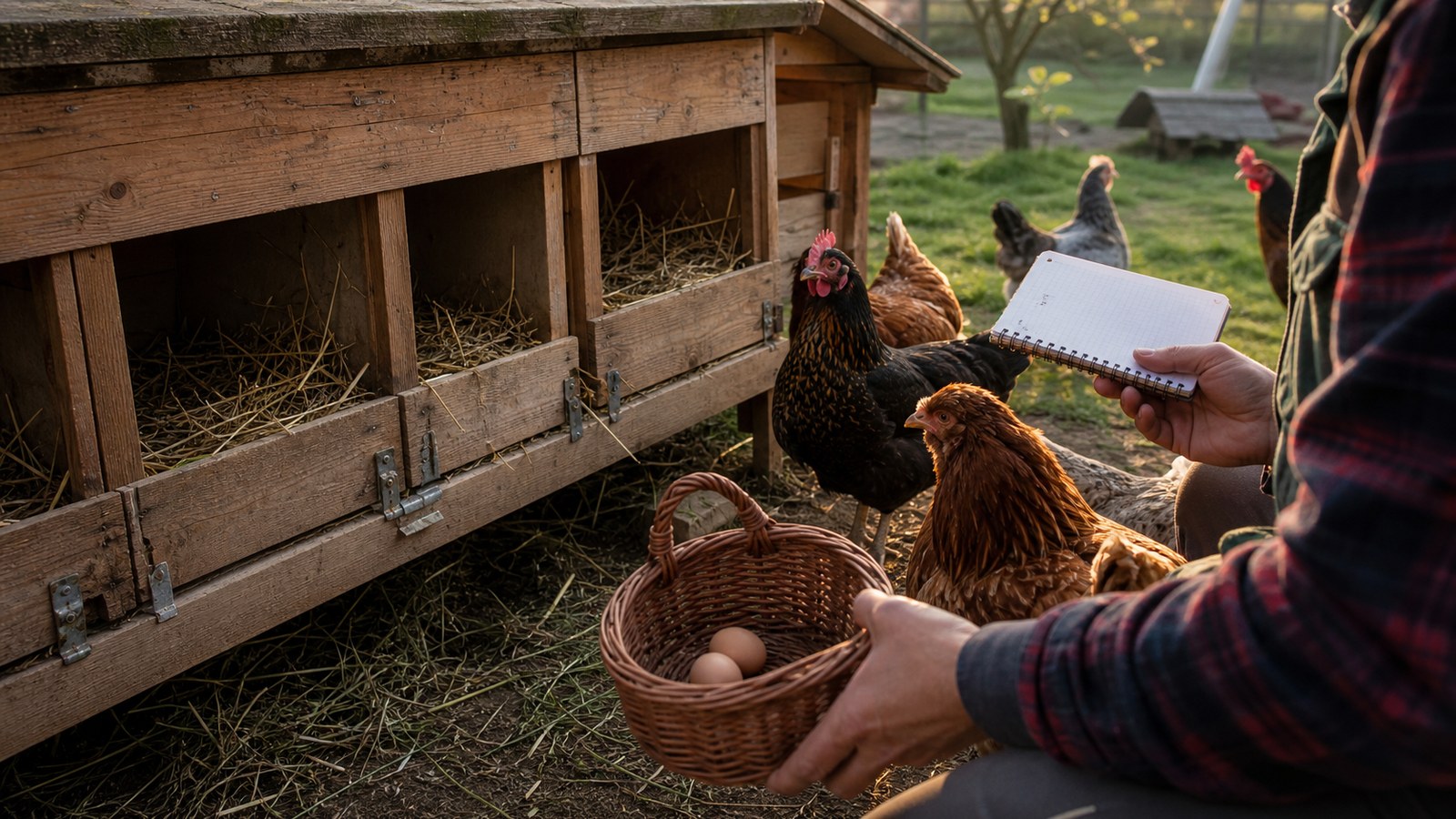
Record the date, egg count, feed changes, weather, treatments, coop cleaning and unusual behaviour. After a month, those notes beat memory.

FAQ
Can I see red mites on hens during the day?
Not always. They often hide in the coop and feed at night, so evening perch checks matter.
Can red mites reduce egg laying?
Yes. Poor sleep, irritation and blood loss can reduce condition and egg production.
Is one clean enough?
Often no. Follow-up checks and repeated action according to product labels are usually needed.
What this guide is based on
Still have a question about your flock?
If you want to ask about your own coop, you can email me. The address appears only after a click, so it is not sitting openly in the page source for simple scraping bots.
Want flock notes, eggs and daily checks in one place?
Your Farm helps you keep egg records, observations, costs and coop notes together, so decisions are based on your own flock instead of guesswork.