What to feed chicks so they grow well without early mistakes
 Piotr Markotpoultry breederFor day-old chicks and small brooders
When people first raise chicks, they often worry about special extras before they lock down the real basics. In practice, the most important things are usually the simplest ones: a good chick starter, clean water, warmth and easy access to feed.
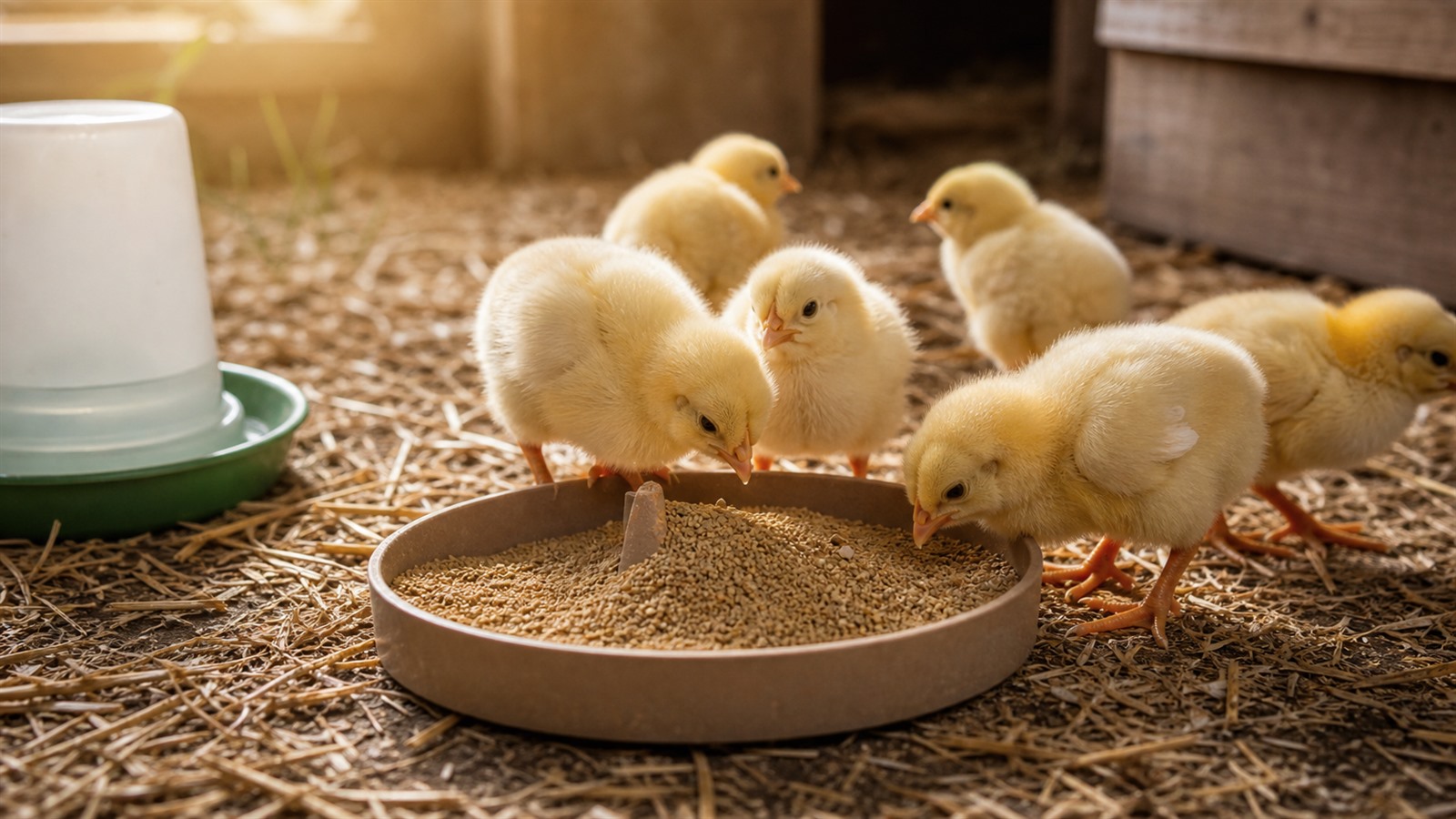
That does not mean small extras are forbidden. It just means extras should stay in their place and never replace the main diet.
Short answer
- starter feed is the main diet from day one,
- boiled yolk or mealworms can be occasional extras,
- treats should never crowd out proper feed intake,
- simple routines usually raise stronger chicks than creative overfeeding.
What chicks really need first
When people hatch or buy their first chicks, they often want to do something special straight away. That instinct is understandable, but the best start is usually very plain: proper brooder heat, clean water and a good chick starter feed that is made for fast early growth.
That starter feed matters because chicks are building everything at once: body mass, feathering, bone development and basic resilience. A few spoonfuls of something "natural" cannot replace a feed designed to cover that job every single day.
What about boiled egg yolk or mealworms?
Used sensibly, they can be fine as extras. A little boiled yolk can tempt weak chicks or simply serve as a small treat. Mealworms can also be offered in moderation later on. The problem starts when keepers begin to think these foods are good enough on their own.
They are not. Chicks should not be built on scattered treats. They need a stable base diet first, and anything extra has to stay clearly in the "small add-on" category.
How I would feed chicks in real life
| Age or moment | What matters most |
|---|---|
| First days | Easy access to starter feed, fresh water and warmth. Keep the routine boring and reliable. |
| When chicks are eating well | You can offer tiny extras occasionally, but keep starter feed as the clear main food. |
| If chicks are weak or slow | Check brooder heat, water intake and feed access first before trying to fix everything with treats. |
What goes wrong most often
The most common mistake is giving too much of the fun stuff and not enough of the boring important stuff. Another mistake is assuming chicks need constant novelty. They do not. Good chicks thrive on routine, not on a changing buffet.
There is also a management mistake hidden in this topic: people sometimes focus on food while the real issue is water intake, brooder temperature or crowding. If chicks are chilled or struggling to drink, changing the menu will not solve the main problem.
What I would recommend to a backyard keeper
If you want a safe, simple answer, use a proper chick starter feed as the base and keep extras small. If you want to give boiled yolk, do it like a little bonus, not like the main ration. If you want to try mealworms, think of them as a treat, not a replacement for balanced feed.
That approach is less exciting than kitchen-style improvisation, but it is the one that usually produces the stronger result.
The first week should be boring, and that is good
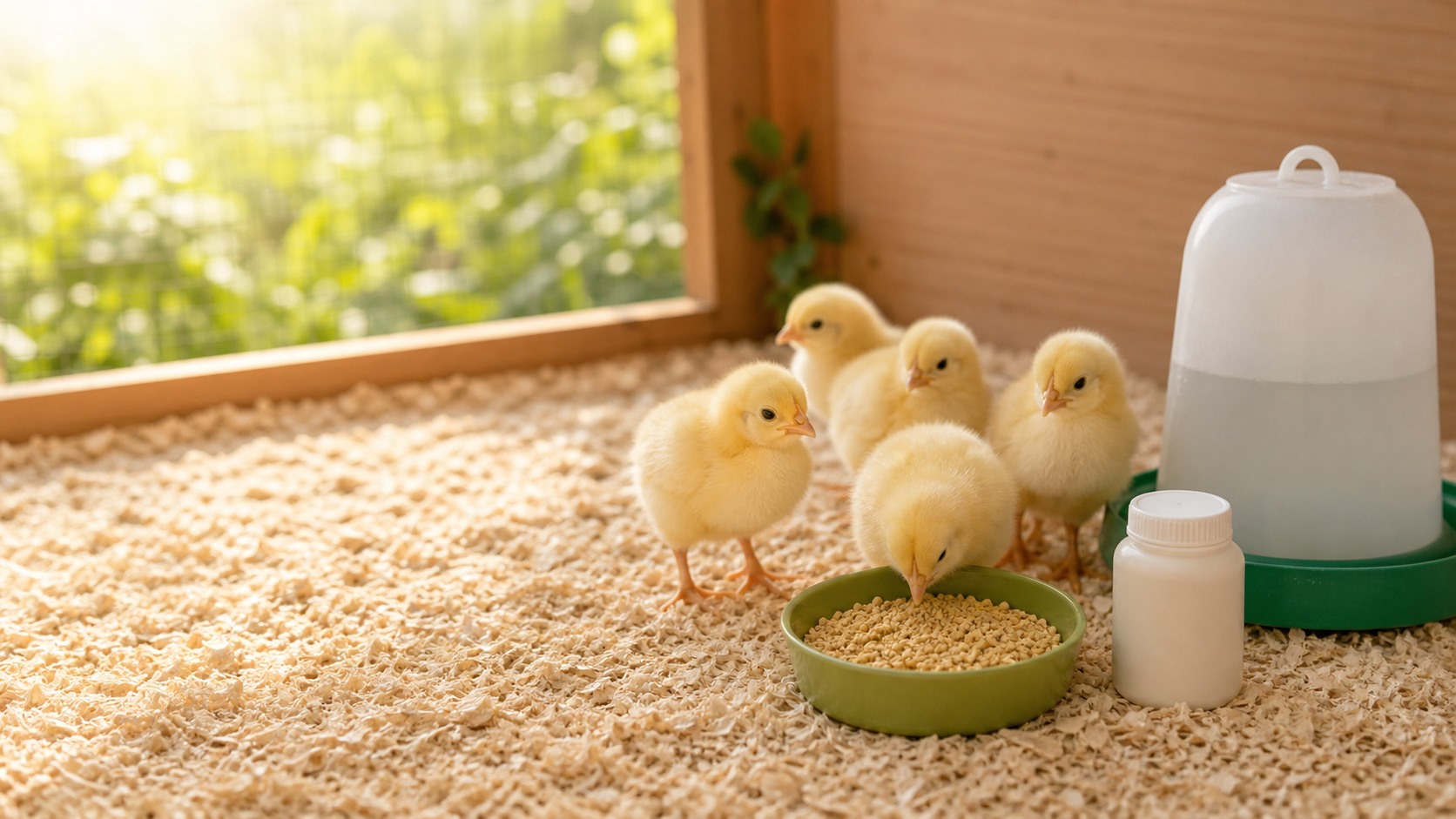
In the first week I would keep feeding simple. A proper chick starter, clean water, warmth and dry bedding matter much more than creative treats. Cooked egg yolk or a few mealworms can be a small extra, but they should not replace the base feed. Chicks grow fast, and the starter is there for a reason.
If chicks are loud, piling up, not eating or getting weak, I would check heat and access to water before reaching for another supplement. Many early problems look like a feeding issue, but start with temperature, damp bedding or a feeder that weaker chicks cannot reach comfortably.
Piotr Markot
Poultry breeder. I write practical notes from everyday small-flock keeping, without making the topic more complicated than it needs to be.
FAQ
Can chicks eat boiled egg yolk?
Yes, in small amounts as an extra, but not instead of proper chick starter feed.
Can chicks eat mealworms?
Yes, as a small treat, not as the base of the diet.
What should chicks eat most of the time?
A balanced starter feed made specifically for chicks.
What matters more than treats?
Heat, water, space and steady access to proper feed.
What this article is based on
Still have a question?
If you want to ask whether your chicks need a different feeding plan or whether the real issue may be heat and water, you can write to me by email.