How to measure incubator temperature the right way
 Piotr Markotpoultry breederReadings that actually matter
One of the easiest ways to confuse yourself during incubation is to trust a number without asking what it really represents. A temperature reading only helps if it reflects conditions the eggs are actually experiencing.
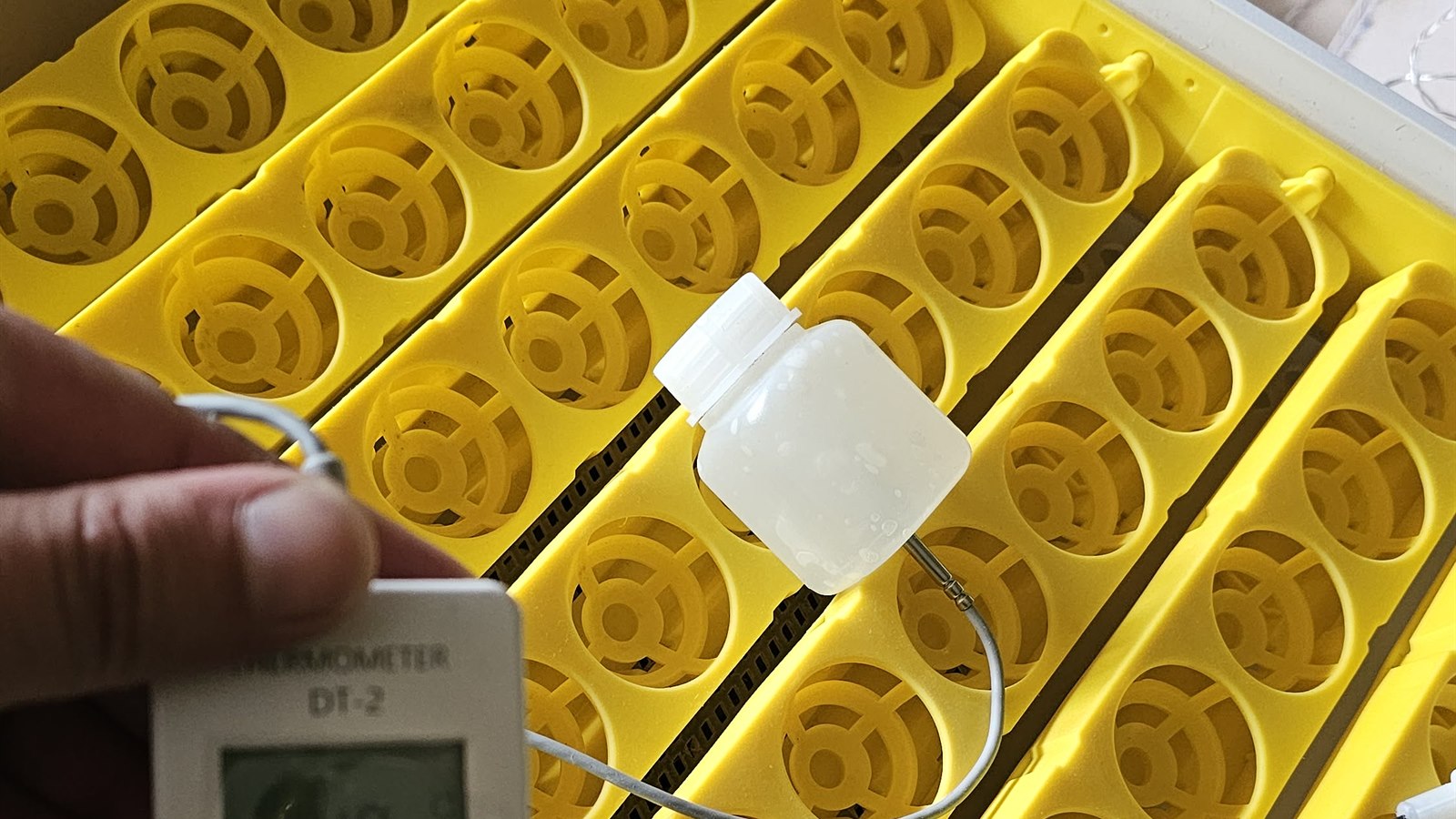
That is why probe placement matters so much. A random air reading inside the incubator can look precise while still telling you less than you think.
Why incubator air temperature is not the whole story
Many people trust the number shown on the incubator more than they trust what is happening around the eggs themselves. That is understandable, but small incubators often cycle, overshoot and move air unevenly. A number taken from free air does not always reflect the more buffered temperature that actually matters around the eggs.
That is why a probe placed into a small liquid-like thermal mass can tell you something more useful than a loose sensor hanging in air.
Why the bottle-and-gel method makes sense
A small bottle filled with gel or another stable medium slows down sharp little air swings and gives the probe something closer to the thermal behaviour of an egg than empty air ever could. The point is not to create a fake temperature. The point is to stop overreacting to every tiny momentary wobble that the eggs themselves are not feeling in the same way.
That is exactly why this method feels more useful in small home incubators. It helps you see whether the incubator is broadly stable, not whether the air twitched for ten seconds after the fan changed cycle.
How to set it up
| Step | Why it matters |
|---|---|
| Place the probe into the gel-filled bottle | This gives the sensor a buffered mass instead of raw free air. |
| Put it at egg level | You want the reading where the eggs actually are, not in some easier but less relevant spot. |
| Leave it long enough to settle | Buffered readings need time to show the real trend instead of instant noise. |
| Compare patterns, not one-second spikes | The goal is stable control, not chasing every tiny movement. |
What kind of mistakes this prevents
The big one is constant overcorrection. A keeper sees air temperature move, tweaks the incubator, sees it move again, tweaks it again, and slowly creates more instability than the machine had at the start. A buffered probe helps calm that cycle because the reading behaves more like something real and less like a nervous heartbeat monitor.
It also helps you compare one hatch to the next more honestly, because you are using a repeatable method rather than a sensor dangling in whatever spot seemed convenient.
What this method does not replace
It does not replace sensible incubator setup, decent air flow, good egg choice or sensible humidity control. It is one part of better measurement, not the whole hatch system. But it is a very useful part because a lot of home incubation mistakes begin with poor interpretation of temperature.
My practical view
If you hatch in a small incubator and keep second-guessing the readings, this is one of the most useful low-cost upgrades you can make. It gives you a calmer picture, which usually leads to calmer decisions.
Where the probe sits matters as much as the probe itself
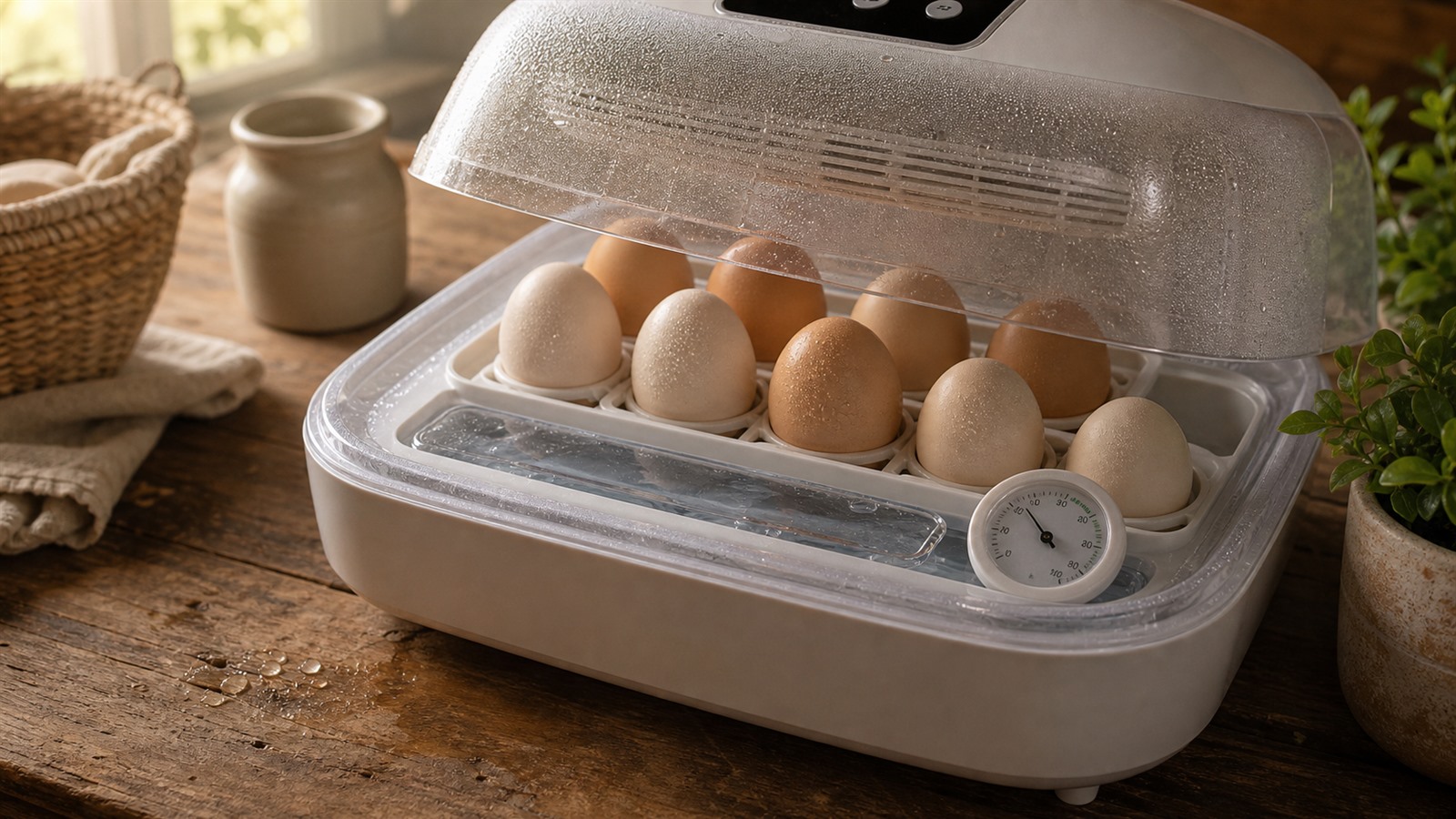
A thermometer can be accurate and still give you a misleading answer if it sits in the wrong place. I would keep the probe around egg height, away from the wall, away from direct fan blast and away from a cold corner. The goal is to understand what the eggs experience, not what one random pocket of air is doing.
Using a small bottle with gel or another stable mass makes the reading calmer. It stops you chasing every tiny air fluctuation and helps you make fewer nervous corrections. In incubation, fewer unnecessary corrections often means a better hatch.
Piotr Markot
Poultry breeder. I write practical notes from everyday small-flock keeping, without making the topic more complicated than it needs to be.
FAQ
Why not just trust the incubator's own air reading?
Because free-air readings can react faster and more sharply than the eggs themselves do.
Why use a bottle with gel?
It creates a buffered thermal mass that makes the reading steadier and more realistic.
Where should I place the bottle?
At egg level, where it reflects the environment the eggs are actually experiencing.
Should I keep adjusting the incubator every time the number moves?
Usually no. The whole point of this method is to help you avoid chasing noise.
Still have a question?
If you want to ask whether your incubator is really stable or how to place the probe more sensibly, you can write to me by email.